
Extensor Digiti Minimi: Anatomy, Function & Why Your Pinky Feels “Off”
Extensor Digiti Minimi (EDM) is the little forearm extensor dedicated to your 5th digit — and while it doesn’t get the spotlight like bigger wrist muscles, it’s essential for smooth finger control, especially on the ulnar side of the hand.
This page breaks down the anatomy, function, innervation, and practical relevance of EDM so you can understand why that pinky finger sometimes feels clumsy, weak, or uncoordinated.
Watch the Video
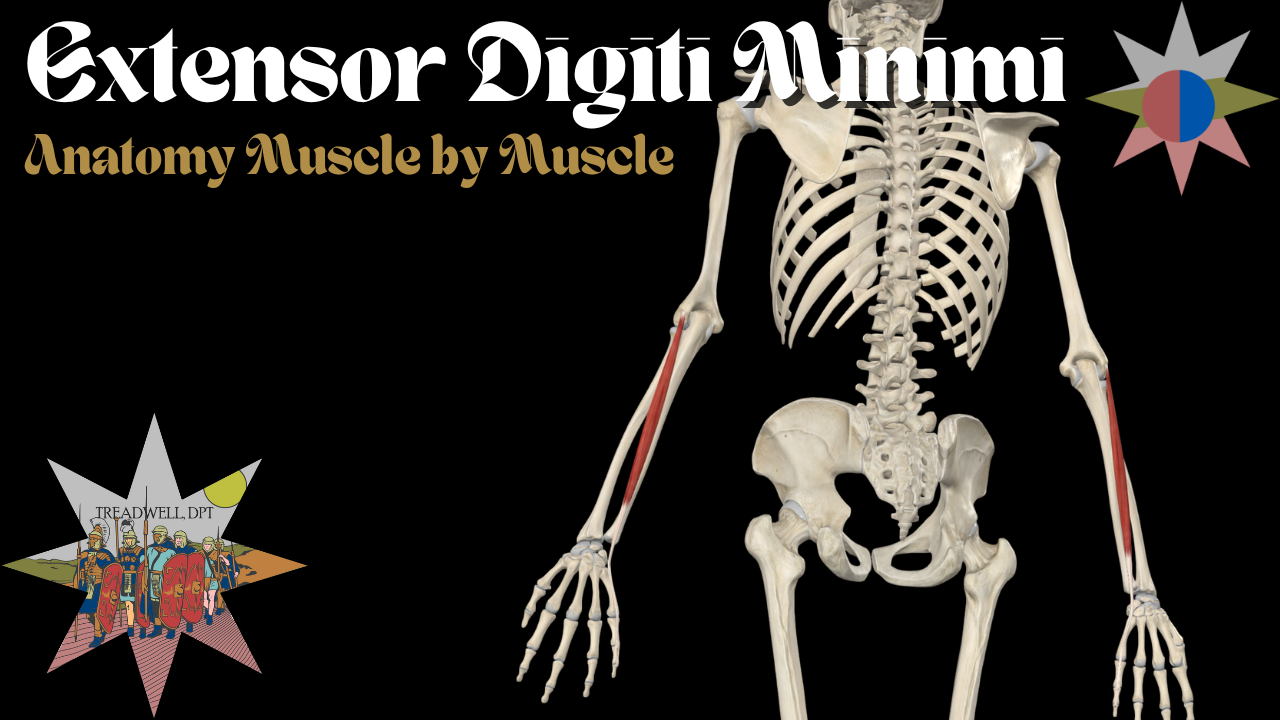
Quick Summary
Location: Posterior forearm, superficial extensor compartment
Primary Role: Extension of the 5th digit
Secondary Role: Assists wrist extension & ulnar stability
Innervation: Posterior interosseous nerve (branch of radial nerve)
Anatomy at a Glance
Origin:
Extensor Digiti Minimi arises from the lateral epicondyle of the humerus via the common extensor tendon.
Pathway & Compartment:
It travels down the posterior forearm alongside the extensor group, crossing the wrist beneath the extensor retinaculum in the dorsal compartments.
Insertion:
The tendon inserts into the extensor expansion of the little finger (5th digit), blending into the extensor hood mechanism that allows finger extension across multiple joints.
What It Actually Does
Primary Function:
Extends the little finger at the MCP joint.
Secondary Contributions:
Supports wrist extension in synergy with other extensors.
Helps stabilize the ulnar side of the hand during grip and release tasks.
Because it’s focused on a single digit, EDM’s role is coordination and control as much as force — especially when precision or balance on the ulnar side matters.
Why This Matters Clinically
When someone says “my pinky doesn’t do what I want,” EDM is part of the story:
✔️ Finger control feels messy or slow
Loss of clear, isolated extension suggests EDM + extensor apparatus coordination issues.
✔️ Ulnar-side wrist or hand discomfort
EDM runs near Extensor Carpi Ulnaris (ECU) and the ulnar wrist — irritation or tendinopathy in this region can present with pinky extension annoyance.
✔️ Post-immobilization stiffness
After fractures or splints that include the 5th digit, EDM can lag in activation timing and strength.
This isn’t usually “weak muscle” in isolation — it’s a control & timing problem that shows up functionally first.
Practical Insight for Training & Rehab
Pinky-specific extension drills
Light band work focused on extending just the 5th digit helps reinforce neural control.
Open-hand extensions with intent
Actively focus on the little finger leading the opening phase of the hand.
Closed-chain ulnar stability
In weight-bearing positions (plank variations, push-ups), encourage slight pinky engagement to balance pressure and improve proprioception.
Focus first on smooth, coordinated control before chasing raw strength — especially with small digit work.
Quick FAQ
What does Extensor Digiti Minimi do?
It extends your pinky finger and helps with coordinated finger control.
Is it the same as Extensor Digitorum?
No — Extensor Digitorum extends four digits 2–5, while EDM is a dedicated little finger extensor.
Why does my pinky feel sluggish but not painful?
Often this reflects timing/control issues in the extensor apparatus rather than sheer weakness.
Want to Improve Hand & Finger Control?
If grip coordination, finger control, or ulnar-side hand comfort is limiting your performance — there’s a method to improve it. You don’t have to guess what’s going on.
