
Plantaris Muscle Anatomy
The plantaris is a small, thin muscle located in the back of the lower leg.
It’s often overlooked — and in some people, it’s not even there at all.
But when it is present, it can play a role in calf pain, movement control, and clinical presentations that are easy to misinterpret.
Small muscle. Big conversation.
What Is the Plantaris?
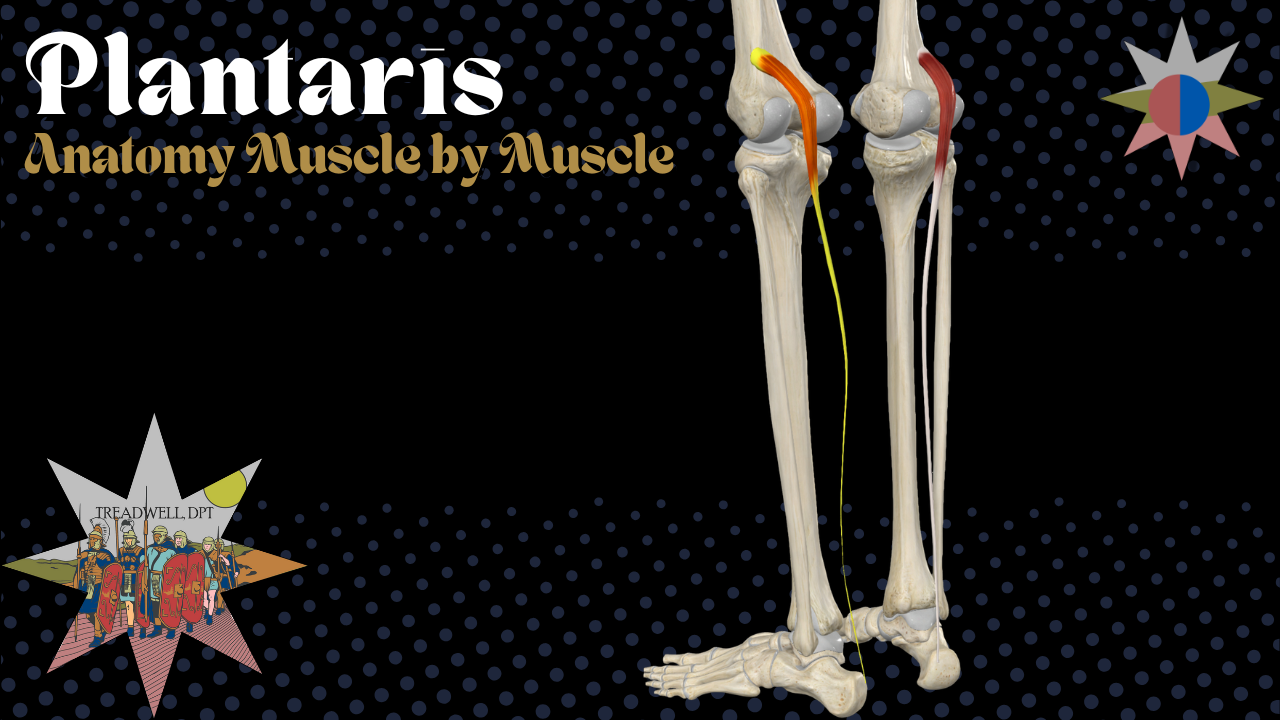
The plantaris is a long, slender muscle that runs along the back of the leg, between the gastrocnemius and soleus.
It has a small muscle belly and a very long, thin tendon that travels down toward the heel.
Fun fact — studies suggest the plantaris is absent in roughly 7–20% of people, depending on the population.
So yeah… not exactly a cornerstone muscle.
But when it’s there, it can matter.
Plantaris Origin and Insertion
The plantaris originates from the lateral supracondylar line of the femur and the oblique popliteal ligament.
It inserts onto the posterior calcaneus, typically blending in near the Achilles tendon.
That long, thin tendon is what makes the plantaris stand out anatomically.
Plantaris Function
The plantaris contributes minimally to movement, but it does assist with:
𖤓 Weak plantarflexion of the ankle
𖤓 Weak knee flexion
𖤓 Subtle proprioceptive feedback (this is where it may actually matter more)
Functionally, the plantaris is not a powerhouse.
If you removed it entirely, most people would not notice any meaningful loss of strength.
That tells you everything you need to know about its role.
Plantaris Innervation
The plantaris is innervated by the tibial nerve, consistent with the other posterior compartment muscles of the leg.
Why the Plantaris Matters Clinically
This is where things get interesting.
The plantaris is often involved in what people call “tennis leg” — a sudden pain in the calf that can feel like something snapped.
Historically, this was attributed to plantaris rupture, but more recent evidence suggests many of these cases actually involve the medial head of the gastrocnemius.
Still, the plantaris can be part of the injury picture.
It may also contribute to:
𖤓 Posterior calf pain
𖤓 Confusion with Achilles tendon issues
𖤓 Irritation due to its proximity to the Achilles
This is one of those muscles where misdiagnosis is common if you’re not thinking broadly.
Plantaris vs Achilles: Why It Matters
Because the plantaris tendon runs close to the Achilles tendon, it can sometimes complicate diagnosis.
Pain in the back of the lower leg is not always “just Achilles.”
The plantaris can create similar symptoms or coexist with Achilles irritation.
If you’re treating or assessing lower leg pain, you need to consider both.
Plantaris and Movement
From a performance standpoint, the plantaris is not driving force production.
The gastrocnemius and soleus handle the heavy lifting.
However, the plantaris may play a small role in sensory feedback and fine-tuning movement — particularly in dynamic activities like running and jumping.
Think of it less as a strength muscle and more as a potential contributor to movement awareness.
Plantaris Pain
Plantaris-related issues typically present as pain in the mid-to-upper calf, sometimes with a sudden onset.
Common scenarios include:
𖤓 Sprinting or pushing off suddenly
𖤓 Changing direction
𖤓 Overloading the calf complex
But here’s the key — calf pain is not automatically plantaris.
You still need to rule out:
Gastrocnemius strain
Soleus strain
Achilles tendinopathy
Deep vein thrombosis (don’t miss this — different conversation entirely)
Don’t get tunnel vision just because you learned a new muscle.
How to Train or Rehab Around the Plantaris
You do not need to isolate the plantaris directly.
Focus on the bigger picture:
𖤓 Calf strengthening (gastroc + soleus)
𖤓 Gradual loading progressions
𖤓 Plyometric control (when appropriate)
𖤓 Running mechanics
𖤓 Mobility and tissue tolerance
The plantaris will be along for the ride.
If symptoms are present, manage load and address the entire calf complex — not just one structure.
Final Thoughts
The plantaris is one of the most debated “small” muscles in the body.
Sometimes it’s there. Sometimes it’s not. Sometimes it matters. Sometimes it doesn’t.
But when it shows up clinically, it can’t be ignored.
Know it. Don’t overhype it. Don’t overlook it either.
Much more in store; even more to come. Stay tuned, stay locked. Treadwell, DPT. Catch you next time!
Want to understand how your calves actually work together?
Don’t stop at one muscle — check out the full Calf Muscle Anatomy guide and see how the gastrocnemius, soleus, and plantaris all connect.
FAQs About the Plantaris
What does the plantaris muscle do?
The plantaris assists weakly with plantarflexion and knee flexion, but its role is minimal compared to larger calf muscles.
Is the plantaris muscle necessary?
No — the plantaris is absent in a percentage of the population, and most people function normally without it.
What is “tennis leg”?
“Tennis leg” refers to sudden calf pain, often associated with injury to the gastrocnemius or sometimes the plantaris.
Can the plantaris cause calf pain?
Yes, the plantaris can contribute to calf pain, but it is not always the primary structure involved.
How is plantaris pain treated?
Treatment typically focuses on load management, calf strengthening, and addressing the broader lower leg rather than isolating the plantaris.
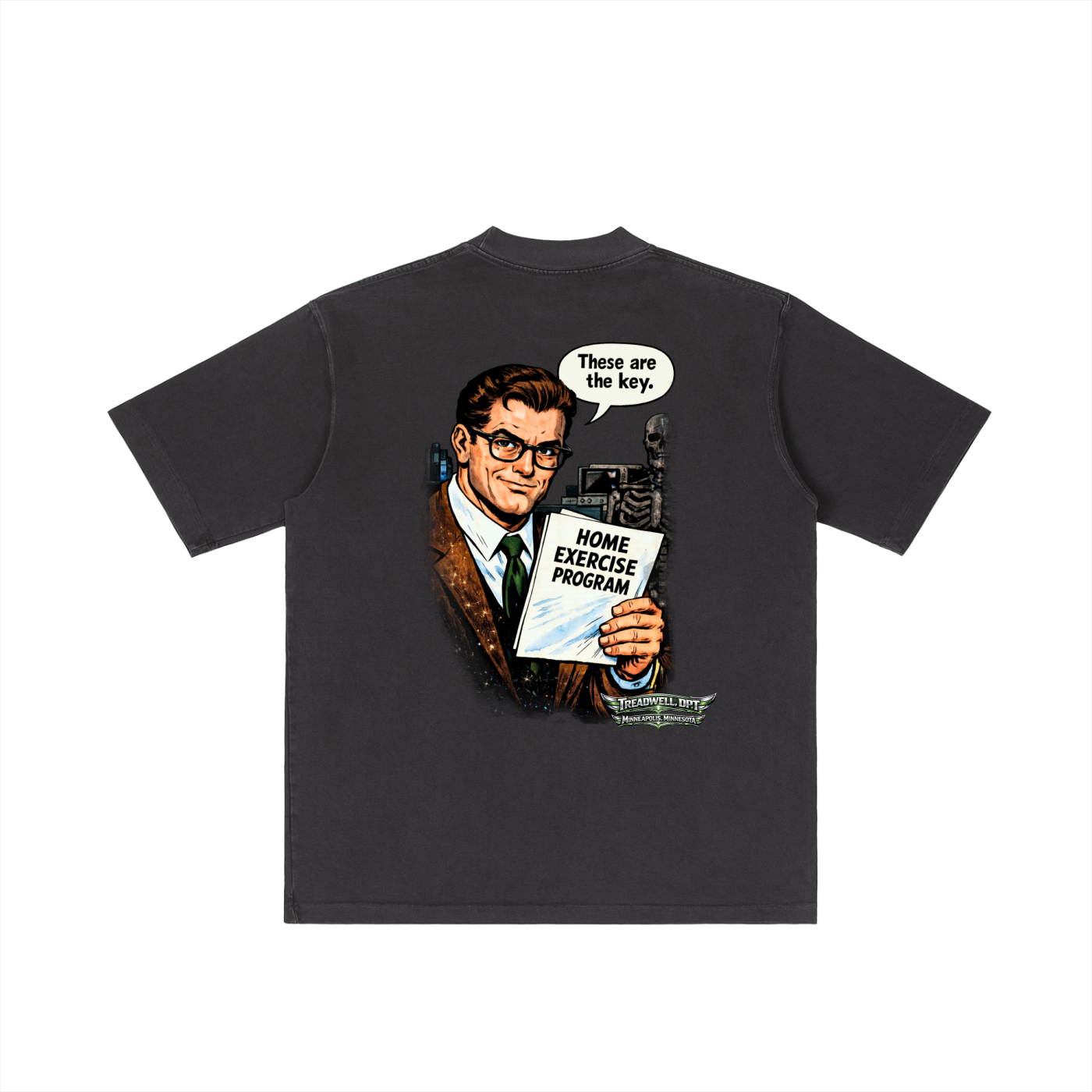
The smartest man in the room…
is the one who actually did his exercises.
A vintage comic-style take on the most important rule in rehab: do the work.
This funny physical therapy shirt highlights the importance of following a home exercise program during rehab and recovery.
Designed for patients, clinicians, and gym-goers, the “World’s Smartest Man” tee turns a common clinical truth into wearable humor.
Fabric:100% cotton
Fabric Weight:10.3 oz/yd² (350 g/m²)
Fabric Thickness:Thick
Care Instructions:Machine wash at 30°C (gentle cycle); Do not bleach; Tumble dry low; Iron at low temperature, avoid ironing on print; Do not dry clean
Features:Basics, Casual, Sporty, Street, Daily Casual, Outdoor, Sport, Office, Pure Cotton, Washed, Short Sleeve, Drop Shoulder, Round Neck / O-Neck, Long, Oversized, Spring, Summer, Autumn
Notes:Minor batch differences can occur during blank garment production due to variations in fabric, dye and processing. This is common in apparel manufacturing, and we work hard to keep every item consistent.
NO REFUNDS/EXCHANGES
