
Popliteus Muscle Anatomy: The “Key” That Unlocks the Knee
Popliteus Muscle Anatomy
The popliteus is a small but important muscle located deep in the back of the knee.
It does not get the same attention as the quads, hamstrings, or calves, but clinically, this muscle matters. The popliteus plays a key role in knee rotation, knee stability, and helping the knee “unlock” when you begin to bend it from a fully straightened position.
Small muscle. Big responsibility.
What Is the Popliteus?
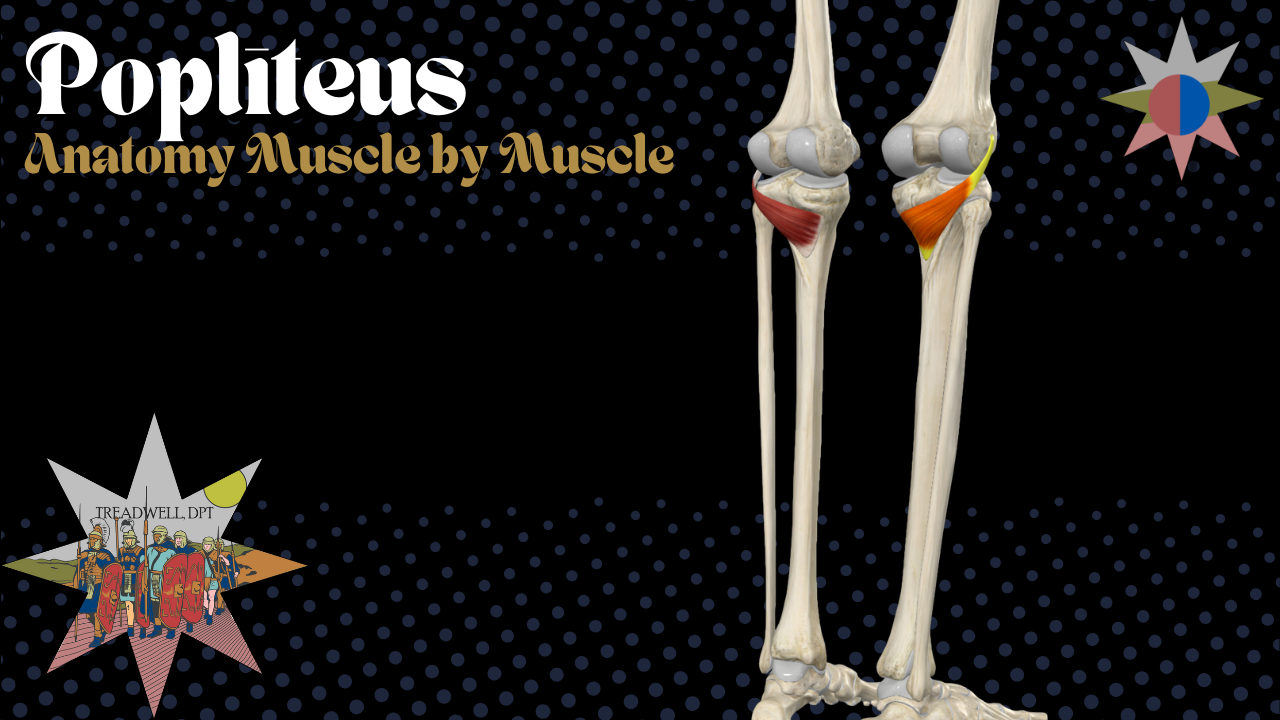
The popliteus is a deep muscle in the posterior knee. It sits underneath the larger calf and hamstring structures and runs from the lateral side of the knee down toward the back of the tibia.
Because of its position, the popliteus is closely related to knee joint mechanics, especially rotational control.
This is one of those muscles that anatomy students sometimes overlook, but clinicians, strength coaches, and rehab professionals should know well.
Popliteus Origin and Insertion
The popliteus originates from the lateral femoral condyle and nearby structures around the lateral knee.
It inserts onto the posterior surface of the tibia, above the soleal line.
That diagonal path gives it leverage to help control rotation at the knee.
Popliteus Function
The popliteus is often described as the muscle that helps unlock the knee.
When the knee is fully extended, the tibia and femur are in a more “locked” position. The popliteus helps initiate knee flexion by creating a small rotational movement that allows the knee to bend more freely.
Its main actions include:
𖤓 Assisting with knee flexion
𖤓 Internally rotating the tibia when the foot is not fixed
𖤓 Externally rotating the femur when the foot is planted
𖤓 Helping stabilize the posterior knee
𖤓 Supporting rotational control during walking, running, cutting, and squatting
This muscle is especially important when the foot is planted and the body is moving over the knee.
That is where the popliteus becomes more than just an anatomy detail — it becomes a movement control muscle.
Popliteus Innervation
The popliteus is innervated by the tibial nerve.
That makes sense anatomically because the tibial nerve supplies many of the posterior lower leg muscles.
Why the Popliteus Matters Clinically
Clinically, the popliteus can matter in cases involving posterior knee pain, rotational knee irritation, instability, or discomfort with activities like downhill walking, running, squatting, or cutting.
It is not always the main problem, but it can absolutely be part of the conversation.
The popliteus helps control subtle movements at the knee that become more important during loaded activity. If someone has poor lower limb control, knee irritation, or difficulty managing rotational stress, the popliteus may be worth assessing.
This is especially true when symptoms are located around the back or outside-back portion of the knee.
Popliteus and Knee Stability
The knee is not just a hinge.
Yes, it bends and straightens, but it also has small rotational movements that are essential for normal function. The popliteus helps manage those rotational demands.
During walking, running, and athletic movement, the knee has to absorb force, control rotation, and transition smoothly between flexion and extension.
The popliteus helps with that.
It is not the biggest muscle in the knee region, but it contributes to the fine-tuned control that keeps the joint moving well.
Popliteus Pain
Popliteus-related irritation may show up as discomfort in the back of the knee, especially with movements that involve rotation, deceleration, downhill walking, or deep knee bending.
That said, posterior knee pain can come from several different structures, including the meniscus, joint capsule, tendons, nerves, vascular structures, or referred pain from other areas.
So don’t just blame the popliteus because it sounds cool.
Assess the whole picture.
How to Train or Rehab the Popliteus
You usually do not need to “isolate” the popliteus aggressively. Instead, think about improving knee control, tibial rotation control, hip strength, ankle mobility, and overall lower-body mechanics.
Useful categories may include:
𖤓 Controlled knee flexion and extension
𖤓 Tibial rotation control drills
𖤓 Step-down variations
𖤓 Split squats
𖤓 Hamstring and calf strengthening
𖤓 Balance and single-leg control
𖤓 Gradual return to running, cutting, or downhill activity
The goal is not just to make the popliteus stronger in isolation.
The goal is to improve how the knee behaves under load.
Final Thoughts
The popliteus is a small muscle with a sneaky important role.
It helps unlock the knee, control rotation, and support posterior knee stability. For anatomy students, it is a muscle worth knowing. For clinicians, it is a muscle worth remembering when knee mechanics do not look quite right.
Small muscle. Big-time knee control.
Much more in store; even more to come. Stay tuned, stay locked. Treadwell, DPT. Catch you next time!
FAQs About the Popliteus
What does the popliteus muscle do?
The popliteus helps unlock the knee from full extension, assists with knee flexion, and helps control rotation at the knee.
Where is the popliteus located?
The popliteus is located deep in the back of the knee, running from the lateral femur to the posterior tibia.
What nerve innervates the popliteus?
The popliteus is innervated by the tibial nerve.
Can the popliteus cause knee pain?
The popliteus may contribute to posterior or posterolateral knee pain, especially with activities involving rotation, downhill walking, running, or cutting. However, knee pain should be assessed in context because many structures can cause similar symptoms.
Why is the popliteus called the key to the knee?
The popliteus is often called the key to the knee because it helps “unlock” the knee from full extension so the joint can begin bending smoothly.
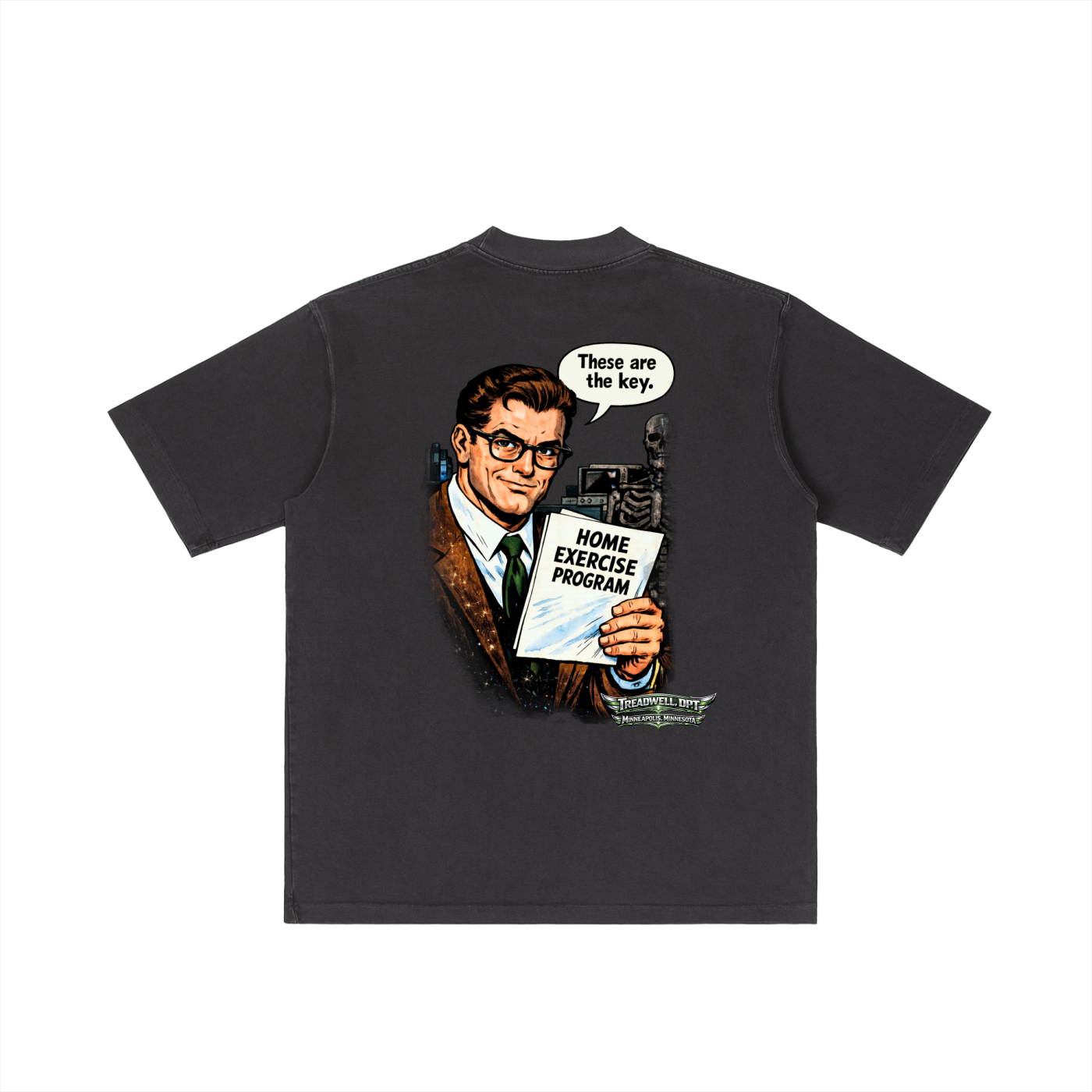
The smartest man in the room…
is the one who actually did his exercises.
A vintage comic-style take on the most important rule in rehab: do the work.
This funny physical therapy shirt highlights the importance of following a home exercise program during rehab and recovery.
Designed for patients, clinicians, and gym-goers, the “World’s Smartest Man” tee turns a common clinical truth into wearable humor.
Fabric:100% cotton
Fabric Weight:10.3 oz/yd² (350 g/m²)
Fabric Thickness:Thick
Care Instructions:Machine wash at 30°C (gentle cycle); Do not bleach; Tumble dry low; Iron at low temperature, avoid ironing on print; Do not dry clean
Features:Basics, Casual, Sporty, Street, Daily Casual, Outdoor, Sport, Office, Pure Cotton, Washed, Short Sleeve, Drop Shoulder, Round Neck / O-Neck, Long, Oversized, Spring, Summer, Autumn
Notes:Minor batch differences can occur during blank garment production due to variations in fabric, dye and processing. This is common in apparel manufacturing, and we work hard to keep every item consistent.
NO REFUNDS/EXCHANGES
