
Sartorius Muscle Anatomy Breakdown
Long, lean, and running across the entire thigh—the sartorius isn’t just the longest muscle in the body… it’s one of the most misunderstood.
If you’re dealing with hip tightness, knee discomfort, or struggling with rotational control, this muscle deserves your attention.
Watch the Full Breakdown
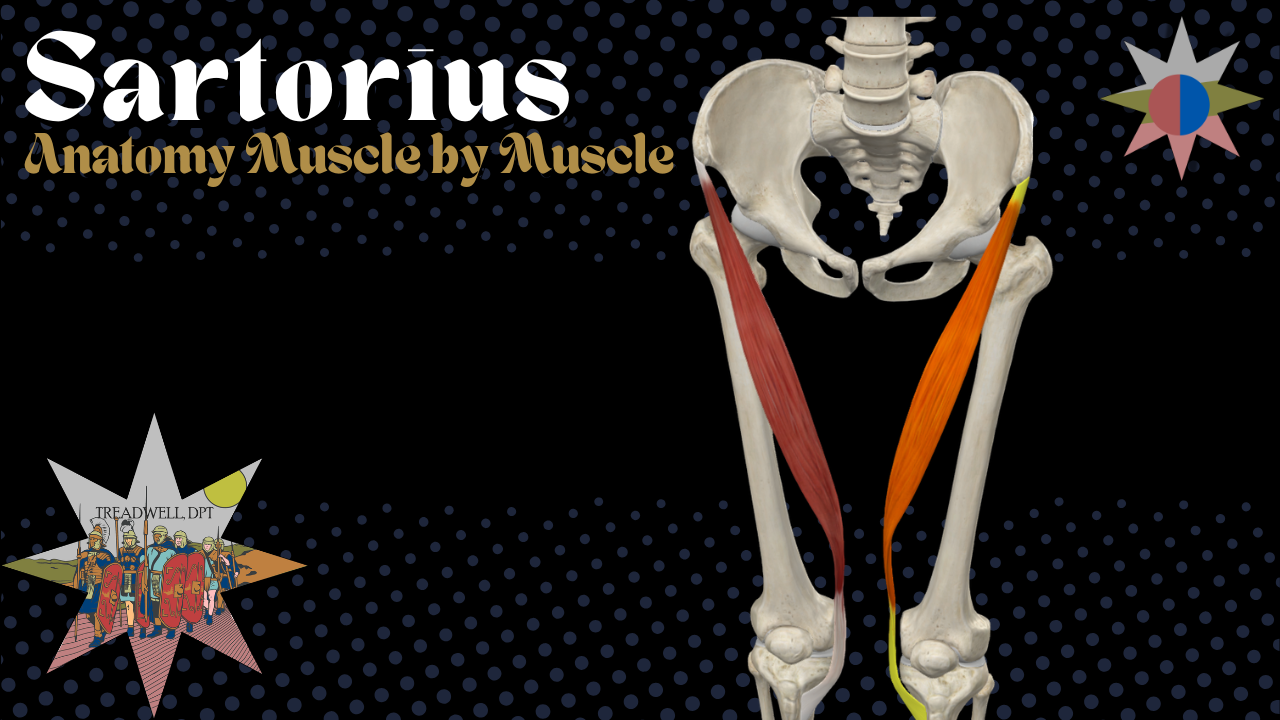
Sartorius Muscle Anatomy (Quick Breakdown)
Origin:
Anterior superior iliac spine (ASIS)
Insertion:
Medial surface of the proximal tibia (pes anserine region)
Innervation:
Femoral nerve (L2–L3)
Function:
Hip flexion
Hip abduction
Hip external rotation
Knee flexion
Why the Sartorius Actually Matters
This isn’t just a “memorize it for anatomy class” muscle.
The sartorius plays a key role in coordinated, multiplanar movement—especially movements that combine hip and knee action.
In the clinic and in performance settings, issues with the sartorius can contribute to:
Medial knee pain (especially around the pes anserine)
Poor control during cutting, pivoting, or direction changes
Compensation patterns with hip flexion and rotation
It’s not always the main problem—but it’s often part of the story.
What Does the Sartorius Muscle Do?
The sartorius is unique because it crosses both the hip and knee joints.
This allows it to assist in complex movements like:
Bringing the leg up (hip flexion)
Rotating the thigh outward
Bending the knee
Think of it as a movement coordinator, helping guide the leg through space rather than just producing raw force.
Why Is the Sartorius Important for Movement?
Because of its length and orientation, the sartorius helps control transitional movement—especially when shifting between positions.
You’ll see it active in:
Sprinting mechanics
Agility and change of direction
Getting into positions like crossing your legs
When it’s not functioning well, movement can feel inefficient, unstable, or just “off.”
Can the Sartorius Cause Pain?
Yes—especially near its insertion at the pes anserine.
This can show up as:
Medial knee pain
Tenderness along the inner knee
Discomfort with stairs, running, or prolonged activity
It’s often grouped into pes anserine irritation, alongside the gracilis and semitendinosus.
Take It Further
Want to move better, perform better, and actually understand what’s going on with your body?
𖤓 Watch more breakdowns
𖤓 Explore the full anatomy library
𖤓 Check out TreadwellDPT.com for resources, gear, and 1-on-1 consults
You don’t need more random exercises—you need clarity.
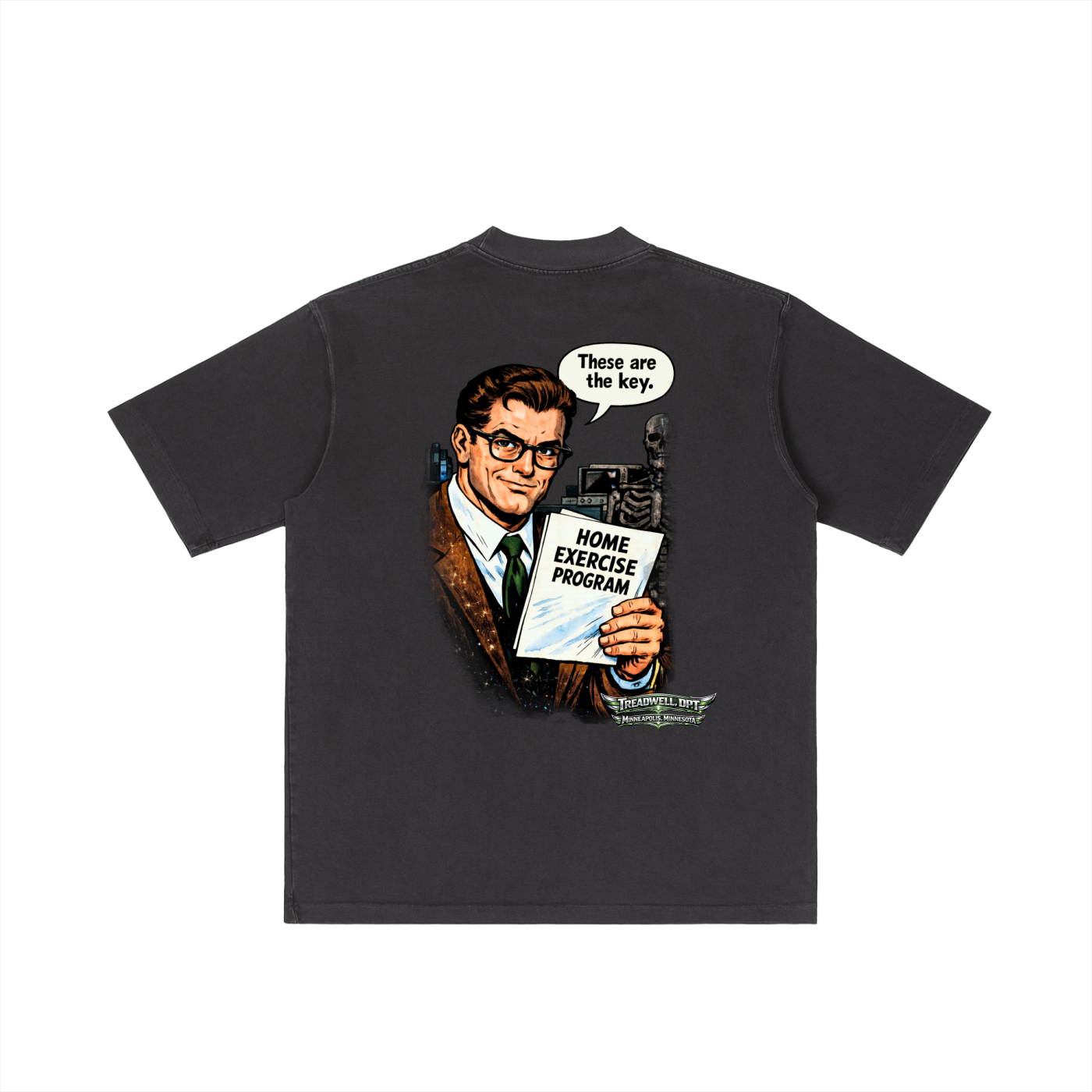
The smartest man in the room…
is the one who actually did his exercises.
A vintage comic-style take on the most important rule in rehab: do the work.
This funny physical therapy shirt highlights the importance of following a home exercise program during rehab and recovery.
Designed for patients, clinicians, and gym-goers, the “World’s Smartest Man” tee turns a common clinical truth into wearable humor.
Fabric:100% cotton
Fabric Weight:10.3 oz/yd² (350 g/m²)
Fabric Thickness:Thick
Care Instructions:Machine wash at 30°C (gentle cycle); Do not bleach; Tumble dry low; Iron at low temperature, avoid ironing on print; Do not dry clean
Features:Basics, Casual, Sporty, Street, Daily Casual, Outdoor, Sport, Office, Pure Cotton, Washed, Short Sleeve, Drop Shoulder, Round Neck / O-Neck, Long, Oversized, Spring, Summer, Autumn
Notes:Minor batch differences can occur during blank garment production due to variations in fabric, dye and processing. This is common in apparel manufacturing, and we work hard to keep every item consistent.
NO REFUNDS/EXCHANGES
