
Quadratus Femoris Anatomy: Origin, Insertion, Function & Clinical Relevance
The quadratus femoris is a small, flat muscle located deep within the posterior hip. It is one of the six deep external rotators and plays an important role in hip external rotation, femoral head control, posterior hip stability, and subtle rotational control during movement.
Although it is not a large or powerful muscle, its location makes it clinically significant. The quadratus femoris sits between the pelvis and proximal femur, close to the sciatic nerve, hamstring origin, and hip joint.
It is also located within the ischiofemoral space, making it particularly relevant when evaluating deep posterior hip pain and possible ischiofemoral impingement.
Watch the Quadratus Femoris Anatomy Breakdown: https://youtu.be/81EEYKMUIQg
In this episode of Anatomy Breakdown – Muscle by Muscle, we cover:
Quadratus femoris origin and insertion
Its role within the deep six hip rotators
Hip external rotation and adduction
Femoral head stabilization
Innervation and nerve roots
Ischiofemoral impingement
Deep posterior hip pain
Why aggressive stretching may not always be appropriate
What Is the Quadratus Femoris?
The quadratus femoris is one of the deep six external rotators of the hip.
The deep six include:
Piriformis
Superior gemellus
Obturator internus
Inferior gemellus
Obturator externus
Quadratus femoris
From superior to inferior, the quadratus femoris is generally the lowest or most distal muscle in the group.
It sits:
Deep to the gluteus maximus
Inferior to the gemelli
Posterior to the hip joint
Between the ischial tuberosity and proximal femur
The name helps describe its appearance:
Quadratus means square-shaped or four-sided.
Femoris means related to the femur.
The muscle is short, broad, and relatively rectangular, running almost horizontally from the pelvis to the posterior femur.
Quadratus Femoris Origin
The quadratus femoris originates from the:
Lateral border of the ischial tuberosity
The ischial tuberosity is commonly called the sit bone because it bears pressure while sitting.
From this origin, the muscle fibers run laterally toward the proximal femur.
Quadratus Femoris Insertion
The quadratus femoris inserts onto the:
Quadrate tubercle
Adjacent portion of the intertrochanteric crest of the femur
In simple terms:
Ischial tuberosity to quadrate tubercle
Or:
Sit bone to posterior femur
Unlike the obturator internus, which changes direction around the lesser sciatic notch, the quadratus femoris follows a short and relatively direct path from the pelvis to the femur.
Its horizontal line of pull supports its role in hip external rotation and deep posterior hip stabilization.
Quadratus Femoris Function
The quadratus femoris is primarily a:
Hip external rotator
When the hip is extended, it helps rotate the femur outward.
It can also assist with:
Hip adduction
Femoral head stabilization
Posterior hip control
Fine control of femoral rotation
The muscle runs from the ischium to the posterior femur, allowing it to pull the femur slightly toward the body’s midline depending on hip position.
However, like the other deep hip rotators, its clinical importance extends beyond producing movement.
The quadratus femoris helps control the relationship between the femoral head and acetabulum while larger muscles create more powerful movements.
Quadratus Femoris and Hip Stability
The quadratus femoris is not a major power muscle like the gluteus maximus.
Instead, it acts as a smaller stabilizing muscle that helps:
Control femoral rotation
Support the posterior hip
Maintain femoral head position
Improve joint congruency
Coordinate movement between the pelvis and femur
Manage rotational forces during weight-bearing activity
This makes it relevant during activities such as:
Walking
Running
Squatting
Lunging
Stair climbing
Single-leg stance
Cutting
Pivoting
Changing direction
Its contribution may be subtle, but deep hip control is important during nearly every dynamic lower-extremity movement.
Quadratus Femoris Innervation
The quadratus femoris is innervated by the:
Nerve to quadratus femoris
The associated nerve roots are typically:
L4, L5, and S1
The nerve to quadratus femoris also supplies the:
Inferior gemellus
This creates a useful anatomical pairing:
Superior gemellus is associated with the nerve to obturator internus.
Inferior gemellus is associated with the nerve to quadratus femoris.
A simple way to remember it is:
Inferior gemellus and quadratus femoris are the downstairs neighbors.
Quadratus Femoris and Posterior Hip Pain
The quadratus femoris is located within a crowded region of the posterior hip.
Nearby structures include:
Ischial tuberosity
Proximal hamstring tendons
Sciatic nerve
Hip joint
Gemelli muscles
Obturator internus
Proximal femur
Because of this, pain in the region may be difficult to identify precisely.
Deep buttock pain may be attributed to the piriformis.
Pain near the sit bone may be attributed to the proximal hamstring.
Symptoms traveling down the leg may be attributed to lumbar radiculopathy or sciatic nerve irritation.
Those may all be appropriate considerations, but the quadratus femoris and surrounding ischiofemoral space should also be remembered.
What Is Ischiofemoral Impingement?
Ischiofemoral impingement describes compression or irritation within the space between the:
Ischium
Proximal femur
The quadratus femoris runs directly through this region.
When the space becomes narrowed, the muscle may be compressed between the ischial tuberosity and femur.
This may contribute to:
Deep buttock pain
Posterior hip pain
Pain near the sit bone
Pain during walking
Pain during long strides
Pain with hip extension
Pain during prolonged standing
Discomfort that feels different from a typical hamstring strain
The available space between the ischium and femur is often called the ischiofemoral space.
A second measurement, the quadratus femoris space, refers more specifically to the region through which the muscle passes.
Symptoms of Ischiofemoral Impingement
Possible symptoms may include:
Deep posterior hip pain
Buttock pain
Pain around the ischial region
Pain aggravated by long-stride walking
Pain with hip extension
Discomfort during prolonged stance
Pain during running or repetitive hip movement
Symptoms that are difficult to localize
These symptoms are not exclusive to ischiofemoral impingement.
Similar complaints may arise from:
Proximal hamstring tendinopathy
Deep gluteal syndrome
Piriformis-related irritation
Lumbar spine pathology
Hip joint pathology
Sacroiliac pain
Sciatic nerve sensitivity
A complete clinical examination is needed to identify the most likely source.
Is Ischiofemoral Impingement More Common in Women?
Ischiofemoral impingement is reported more frequently in women.
This may be influenced by anatomical differences involving:
Pelvic width
Femoral position
Hip structure
Ischiofemoral spacing
Previous hip surgery
Changes in walking mechanics
However, it can occur in people of any sex.
Anatomical imaging findings should also be interpreted carefully because a narrowed space does not automatically mean it is the source of symptoms.
Quadratus Femoris Compression vs. Tightness
Pain involving the quadratus femoris may not always result from the muscle being short or tight.
The region may instead be:
Compressed
Irritated
Inflamed
Sensitive to hip extension
Sensitive to repeated loading
Poorly tolerant of long-stride walking
Affected by altered femoral or pelvic mechanics
This distinction matters because stretching is not always the best initial response to posterior hip pain.
If the primary issue is compression, aggressive stretching may increase irritation rather than relieve it.
Should You Stretch the Quadratus Femoris?
Stretching the deep hip rotators may feel helpful for some muscular presentations.
However, it may be less useful when symptoms are related to compression within the ischiofemoral space.
A stretch may be inappropriate when it produces:
Sharp posterior hip pain
Deep pinching
Burning
Tingling
Numbness
Symptoms traveling down the leg
Increased pain afterward
The response to the movement matters more than the name of the stretch.
For compression-sensitive presentations, treatment may initially emphasize reducing irritation and improving load tolerance rather than aggressively forcing mobility.
Quadratus Femoris Exercises
The quadratus femoris is difficult to isolate because it works with the other deep external rotators.
Exercises that may train the surrounding hip system include:
Resisted hip external rotation
Bridges
Clamshells
Split squats
Step-ups
Single-leg balance
Controlled lunges
Lateral band walks
Monster walks
Hip-hinge exercises
Multidirectional stepping
The goal is generally to improve:
Hip strength
Femoral control
Rotational stability
Pelvic control
Load tolerance
Movement confidence
Exercise selection should reflect the individual’s symptoms and whether the region is sensitive to compression, stretching, or loading.
Quadratus Femoris vs. Proximal Hamstring Pain
The quadratus femoris and proximal hamstring tendons are both located near the ischial tuberosity.
This can make symptoms difficult to distinguish.
Proximal Hamstring Pain
Often associated with:
Pain directly at the hamstring origin
Pain during resisted knee flexion
Pain during hip hinging
Pain while sitting
Pain with running or sprinting
Quadratus Femoris or Ischiofemoral Pain
May be associated with:
Deeper posterior hip pain
Pain with long-stride walking
Pain during hip extension
Pain with certain combinations of hip rotation
Discomfort located between the ischium and femur
Symptoms can overlap, so diagnosis should not be based only on pain location.
Quadratus Femoris vs. Piriformis
Both muscles are part of the deep posterior hip, but they occupy different positions.
Piriformis
Originates from the anterior sacrum
Inserts onto the superior greater trochanter
Passes through the greater sciatic foramen
Closely associated with the sciatic nerve
Located higher within the deep gluteal region
Quadratus Femoris
Originates from the lateral ischial tuberosity
Inserts onto the quadrate tubercle
Runs almost horizontally
Located inferior to the gemelli
Sits within the ischiofemoral space
Both can be relevant in posterior hip pain, but they represent different anatomical relationships.
Clinical Takeaway
The quadratus femoris is a small, deep muscle with an important location.
It contributes to:
Hip external rotation
Hip adduction
Femoral head stabilization
Deep posterior hip control
Subtle rotational coordination
Support of the hip during dynamic movement
Its position between the ischium and femur also makes it especially relevant when considering ischiofemoral impingement.
Not every person with buttock pain has a quadratus femoris problem.
However, when posterior hip symptoms do not fit neatly into a piriformis, hamstring, lumbar spine, or hip joint diagnosis, the quadratus femoris and ischiofemoral space deserve consideration.
The muscle may be small, but its location gives it significant clinical importance.
Frequently Asked Questions
What does the quadratus femoris do?
The quadratus femoris externally rotates the hip and assists with hip adduction. It also helps stabilize the femoral head and control rotation within the posterior hip.
Where is the quadratus femoris located?
It is located deep within the posterior hip, inferior to the gemelli and deep to the gluteus maximus.
What is the origin of the quadratus femoris?
The quadratus femoris originates from the lateral border of the ischial tuberosity.
Where does the quadratus femoris insert?
It inserts onto the quadrate tubercle and adjacent intertrochanteric crest of the femur.
What nerve innervates the quadratus femoris?
It is innervated by the nerve to quadratus femoris, with contributions from L4, L5, and S1.
Is the quadratus femoris part of the deep six?
Yes. It is one of the six deep external rotators of the hip.
What is ischiofemoral impingement?
Ischiofemoral impingement involves narrowing and irritation within the space between the ischium and proximal femur. The quadratus femoris passes through this region and may become compressed.
What does ischiofemoral impingement feel like?
Possible symptoms include deep buttock or posterior hip pain, pain near the sit bone, and discomfort aggravated by long-stride walking or hip extension.
Can the quadratus femoris cause sciatica?
The quadratus femoris is located near the sciatic nerve, but sciatica has many possible causes. Lumbar and other deep gluteal sources should also be considered.
Should you stretch the quadratus femoris?
Stretching may help some muscular complaints, but aggressive stretching may worsen symptoms if the region is compression-sensitive or neurologically irritated.
Is quadratus femoris pain the same as a hamstring injury?
No. The regions are close together, and symptoms may overlap, but the quadratus femoris and proximal hamstring are different structures.
Can you isolate the quadratus femoris?
Complete isolation is difficult because it works with the other deep hip external rotators. Rehabilitation typically focuses on the broader hip stabilization system.
Continue Learning Anatomy
Continue exploring the origins, insertions, innervation, actions, and clinical relevance of the deep hip muscles through Anatomy Breakdown – Muscle by Muscle.
Superior and Inferior Gemellus Anatomy
Obturator Internus Anatomy
Piriformis Anatomy
Subscribe to Treadwell, DPT
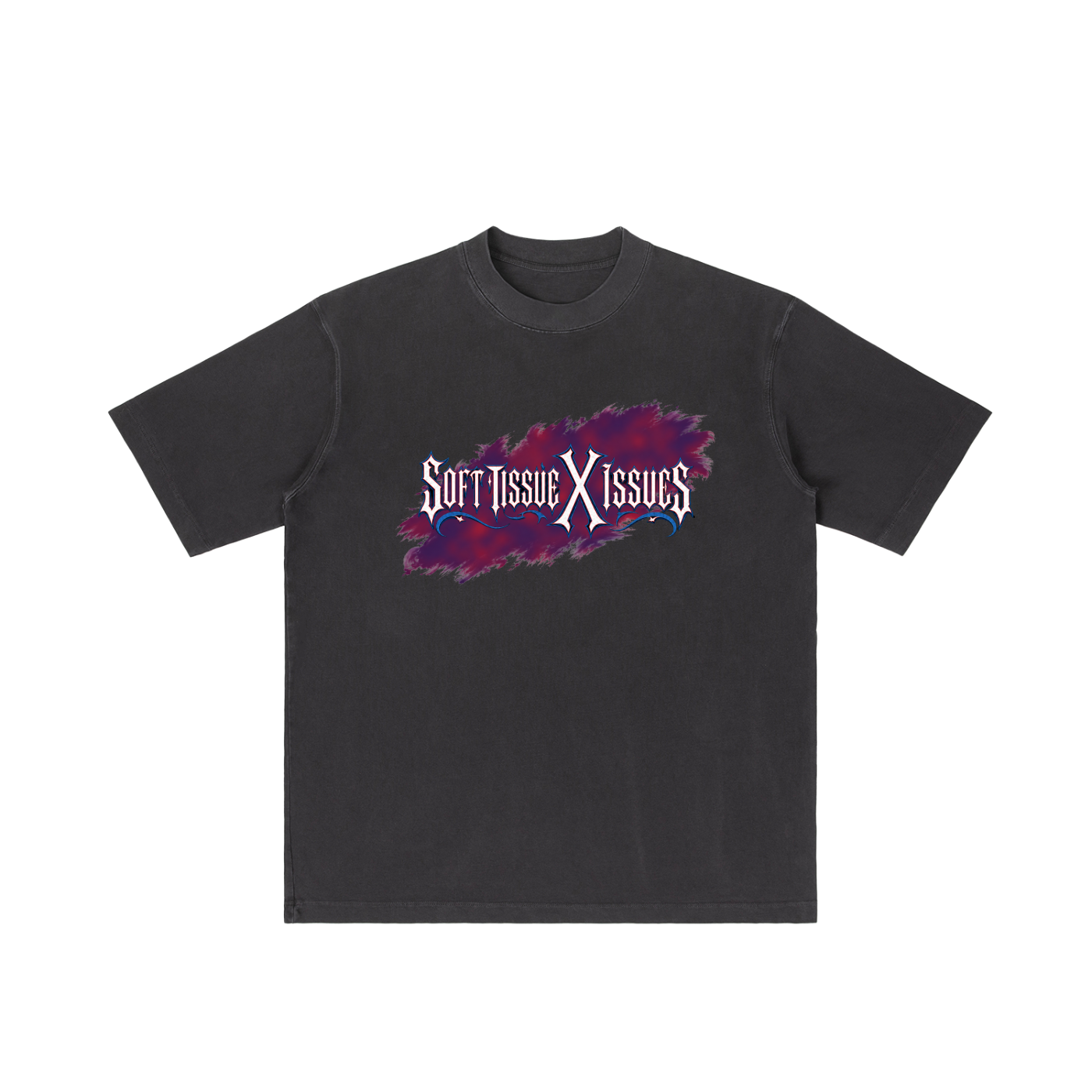
Fabric: 100% cotton
Fabric Weight:10.3 oz/yd² (350 g/m²)
Fabric Thickness: Thick
For the rehab pros with championship-level hands.
The Soft Tissue Issues Tee brings pro wrestling energy to the physical therapy world with a loud, vintage-inspired graphic built for PTs, PTAs, massage therapists, athletic trainers, students, lifters, and anyone who knows soft tissue work can feel like a main event.
With a bold front logo and a full back graphic featuring championship rehab attitude, this shirt is made for people who live somewhere between the clinic, the gym, and ringside chaos.
Wear it to the clinic, the gym, class, or anywhere you want your PT humor to hit a little harder than the average anatomy tee.
Best for:
Physical therapists, PT students, rehab pros, massage therapists, athletic trainers, gym lovers, wrestling fans, and anyone with soft tissue issues.
NO REFUNDS/EXCHANGES
