
Extensor Pollicis Longus – Full Anatomy Breakdown
If you’ve ever extended your thumb or given a thumbs-up — you’ve used the Extensor Pollicis Longus!
This muscle doesn’t get talked about much…
but clinically, it matters way more than people realize.
And if you’ve had wrist pain, tendon irritation, or issues after a distal radius fracture — this one’s high on the suspect list.
Watch the Full Breakdown
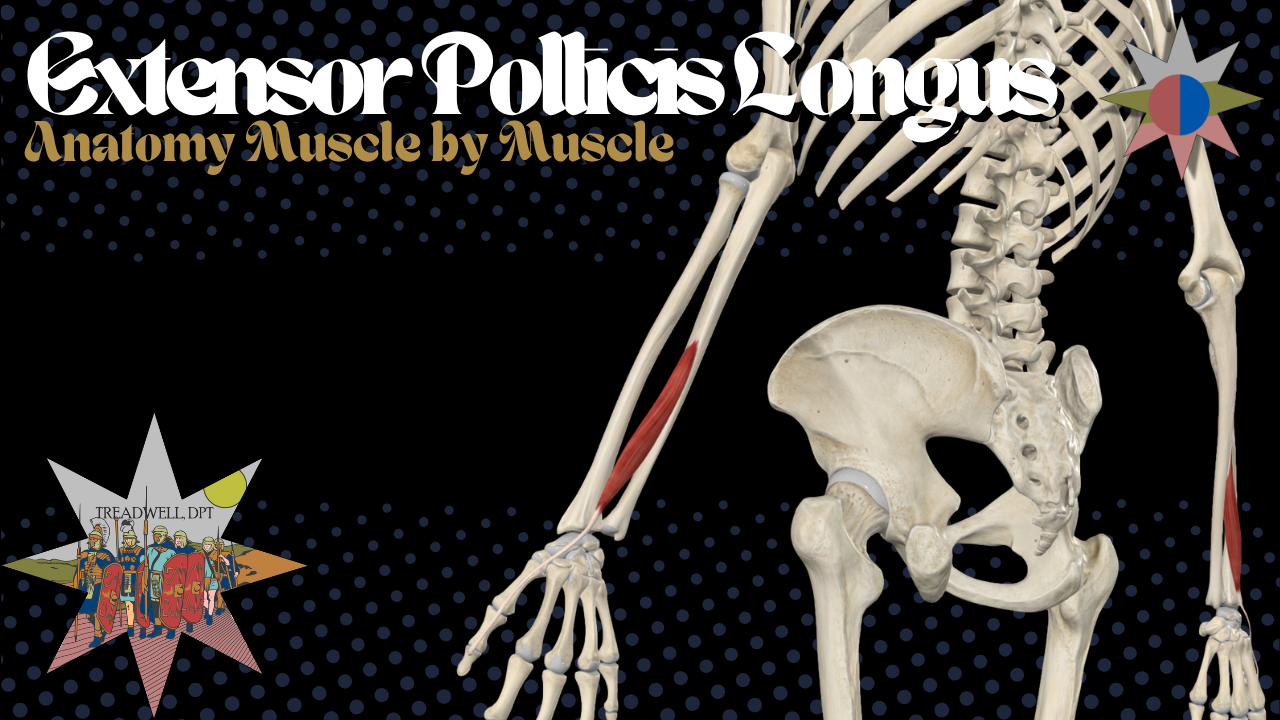
Origin
Posterior surface of the ulna
Interosseous membrane
Insertion
Base of the distal phalanx of the thumb
Innervation
Posterior interosseous nerve (radial nerve branch)
What It Actually Does
The EPL’s main job:
𖤓 Extends the thumb at the IP joint
𖤓 Assists with MCP and CMC extension
𖤓 Helps reposition the thumb during grip and release
This muscle is critical for controlled thumb positioning, not just movement.
That matters for:
Grip mechanics
Lifting
Fine motor control
Rehab after wrist injuries
The “Hidden” Detail That Makes EPL Unique
Lister’s tubercle
The EPL tendon wraps around this bony landmark at the wrist.
That changes everything.
It creates a pulley system, which:
Improves mechanical efficiency
But also increases friction and stress
Translation:
This tendon is prone to irritation and rupture, especially after trauma.
Clinical Relevance
1. EPL Tendon Rupture
Most commonly seen:
After distal radius fractures
From chronic irritation
Why?
Because blood supply to the tendon is relatively poor near Lister’s tubercle.
2. Dorsal Wrist Pain
Pain on the back of the wrist?
EPL is often involved — especially with:
Repetitive thumb use
Lifting straps/grips
Overuse patterns
3. Weak Thumb Extension
If someone can’t extend their thumb properly:
You’re thinking:
EPL dysfunction
Or radial nerve involvement
Why This Matters for Training & Rehab
You don’t isolate EPL directly — but you load it constantly.
Think:
Deadlifts
Pull-ups
Gripping movements
Even phone use
If this muscle isn’t handling load well:
You get compensation, irritation, & setbacks,
Simple Takeaway
The Extensor Pollicis Longus isn’t just a “thumb muscle.”
It’s a precision control system for the thumb —
and a common failure point when load, mechanics, or recovery fall off.
If you want the full clinical breakdown — movement, injury patterns, and rehab insight:
