
Video: https://youtu.be/usk3ZsLK8YM
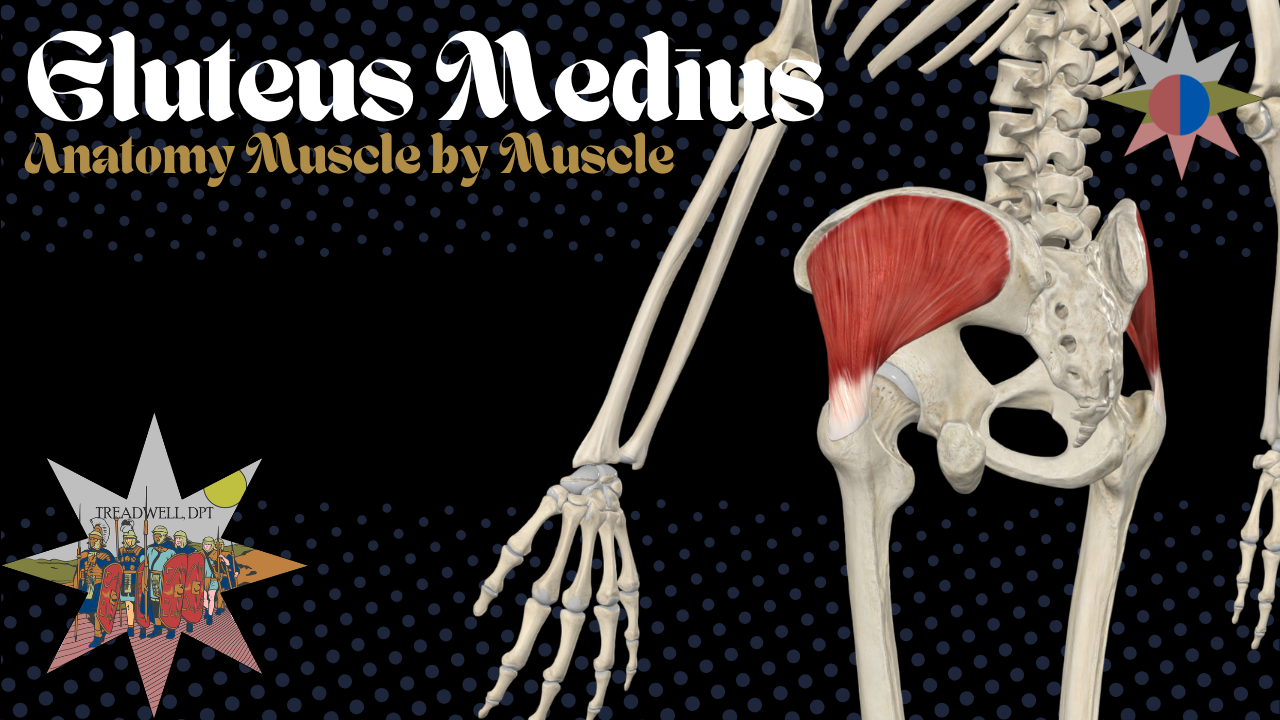
The gluteus medius, commonly called the glute med, is one of the most important muscles involved in hip strength, pelvic stability, walking mechanics, running, balance, and single-leg control.
Although it is best known as a hip abductor, the gluteus medius does much more than move the leg out to the side. It helps keep the pelvis level, control the position of the femur, stabilize the lower extremity, and manage forces throughout the hip, knee, ankle, and lower back.
In this Anatomy Breakdown, we cover the gluteus medius muscle’s:
Origin and insertion
Innervation
Primary actions
Different fiber functions
Role in pelvic stability
Relationship with knee valgus and lower-extremity mechanics
Clinical connection to Trendelenburg gait
Importance during rehabilitation and strengthening
What Is the Gluteus Medius?
The gluteus medius is a broad, fan-shaped muscle located along the lateral surface of the pelvis.
It sits above the gluteus maximus, although its lower portion is partially covered by the gluteus maximus. The upper portion of the gluteus medius is relatively superficial and can be located around the upper outer region of the hip.
The gluteus medius is one of the primary lateral hip stabilizers and works closely with the:
Gluteus minimus
Tensor fasciae latae
Gluteus maximus
Deep hip rotators
Trunk and core musculature
Together, these muscles help control the pelvis and femur during standing, walking, running, jumping, landing, and changing direction.
Gluteus Medius Origin
The gluteus medius originates from the:
External surface of the ilium
Area between the anterior gluteal line
And the posterior gluteal line
This creates a broad attachment across the lateral surface of the pelvis.
Its wide, fan-shaped origin allows different regions of the muscle to contribute to different movements depending on hip position and the direction of force.
Gluteus Medius Insertion
The gluteus medius inserts onto the:
Lateral surface of the greater trochanter of the femur
The greater trochanter is the large bony prominence located near the upper portion of the femur.
The gluteus medius therefore travels from the lateral pelvis to the lateral femur, creating an effective line of pull for both moving and stabilizing the hip.
Gluteus Medius Innervation
The gluteus medius is innervated by the:
Superior gluteal nerve
The associated nerve roots are:
L4, L5, and S1
The superior gluteal nerve also innervates the gluteus minimus and tensor fasciae latae. These muscles share important roles in hip abduction, pelvic control, and lower-extremity stability.
Gluteus Medius Actions
The primary action of the gluteus medius is:
Hip abduction
Hip abduction moves the femur away from the body’s midline.
However, the gluteus medius contains multiple fiber regions with different lines of pull.
Anterior Gluteus Medius Fibers
The anterior fibers may assist with:
Hip abduction
Hip flexion
Hip internal rotation
Posterior Gluteus Medius Fibers
The posterior fibers may assist with:
Hip abduction
Hip extension
Hip external rotation
Because of its broad attachment and varied fiber orientation, the gluteus medius can contribute to movement and stabilization across multiple planes.
Its exact contribution may change depending on:
Hip position
Weight-bearing status
Movement direction
Task demands
Which portion of the muscle is most active
Gluteus Medius and Pelvic Stability
One of the gluteus medius muscle’s most important functions is maintaining pelvic stability during single-leg stance.
During walking and running, there are periods when the entire body is supported by one leg.
When standing on the right leg, for example, the right gluteus medius must produce enough force to help prevent the left side of the pelvis from dropping.
This makes the gluteus medius especially important during:
Walking
Running
Stair climbing
Single-leg balance
Lunging
Stepping
Jumping
Landing
Cutting and changing direction
Sports requiring unilateral control
The gluteus medius is therefore not simply a movement-producing muscle. It is also a major control and stabilization muscle.
Gluteus Medius and Knee Valgus
Reduced hip strength or poor gluteus medius control may contribute to excessive movement throughout the lower extremity.
This may include:
Increased hip adduction
Increased femoral internal rotation
Pelvic drop
Trunk compensation
Dynamic knee valgus
Excessive foot or ankle compensation
Dynamic knee valgus describes a position in which the knee moves inward relative to the hip and foot.
The gluteus medius does not directly control the knee joint, but it can influence knee alignment by helping control the pelvis and femur from above.
When the femur moves excessively into adduction and internal rotation, the knee may appear to collapse inward during tasks such as:
Squatting
Running
Landing
Stepping down
Cutting
Single-leg balance
This is one reason hip strength and control are frequently addressed during rehabilitation for knee pain.
Gluteus Medius and Patellofemoral Pain
The gluteus medius is often included in rehabilitation programs for patellofemoral pain, sometimes called runner’s knee.
Patellofemoral pain commonly presents as discomfort around or behind the kneecap during activities such as:
Squatting
Running
Stair climbing
Sitting for long periods
Jumping
Repetitive knee bending
Hip-focused strengthening may improve control of the pelvis and femur and reduce excessive lower-extremity movement during loaded activities.
A rehabilitation program may include strengthening for the:
Gluteus medius
Gluteus maximus
Quadriceps
Calf musculature
Trunk and core muscles
Strengthening the gluteus medius should not be treated as a universal cure for knee pain. Symptoms should be evaluated alongside training volume, quadriceps capacity, mobility, movement strategy, recovery, and overall load tolerance.
Trendelenburg Sign
The Trendelenburg sign is one of the most well-known clinical findings associated with reduced hip abductor function.
During a Trendelenburg test, the individual stands on one leg.
A positive Trendelenburg sign occurs when the pelvis drops on the side opposite the stance leg.
For example:
The person stands on the right leg.
The left side of the pelvis drops.
This may indicate reduced right-sided hip abductor function.
The gluteus medius is one of the primary muscles responsible for preventing this pelvic drop.
A positive finding may also be influenced by:
Pain
Neurological impairment
Hip joint pathology
Poor balance
Reduced motor control
Superior gluteal nerve dysfunction
Generalized lower-extremity weakness
The Trendelenburg sign should therefore be interpreted as part of a complete clinical examination rather than used as an isolated diagnosis.
Trendelenburg Gait
A Trendelenburg gait occurs when reduced hip abductor function affects pelvic control during walking.
Possible gait findings include:
Pelvic drop on the opposite side
Trunk lean toward the stance leg
Reduced time spent on one leg
Shortened step length
Altered balance
Increased energy expenditure
Reduced walking efficiency
A person may lean their trunk toward the stance leg to reduce the demand placed on the hip abductors.
Although this compensation may help the individual remain upright, it can create less efficient gait mechanics and alter loading throughout the hip, knee, and lower back.
Can Gluteus Medius Weakness Cause Hip Pain?
Gluteus medius weakness, reduced capacity, poor coordination, or tendon irritation may contribute to pain around the lateral hip.
However, lateral hip pain can arise from several different structures, including:
Gluteus medius tendon
Gluteus minimus tendon
Greater trochanteric bursa
Lumbar spine
Hip joint
Surrounding soft tissues
Referred pain from nearby structures
Gluteus medius tendon irritation is commonly associated with greater trochanteric pain syndrome.
Possible symptoms include:
Pain over the outside of the hip
Pain while lying on the involved side
Pain during prolonged standing
Pain during walking or stair climbing
Pain during single-leg stance
Tenderness near the greater trochanter
Treatment often involves gradually building tolerance to loading rather than simply stretching or avoiding activity indefinitely.
Gluteus Medius Strengthening
Effective gluteus medius strengthening should develop both muscular force and movement control.
Common exercise options include:
Side-lying hip abduction
Standing hip abduction
Lateral band walks
Monster walks
Step-ups
Lateral step-downs
Single-leg balance
Single-leg Romanian deadlifts
Split squats
Lunges
Single-leg squats
Hip hikes
Controlled running and landing drills
Exercise selection should match the person’s current strength, symptoms, coordination, and functional goals.
Early exercises may isolate hip abduction, while later exercises should challenge the gluteus medius during functional weight-bearing tasks.
How to Reduce TFL Compensation During Glute Exercises
The tensor fasciae latae can assist with hip abduction and may become highly active during exercises intended to target the gluteus medius.
To reduce excessive TFL dominance, consider:
Avoiding excessive hip flexion
Keeping the pelvis controlled
Preventing the hip from rolling forward
Using a slightly extended hip position when appropriate
Moving slowly through the exercise
Reducing resistance if form begins to change
Choosing exercises that emphasize posterior and lateral hip control
Progressing toward functional single-leg exercises
The goal is not to completely eliminate TFL activity. The TFL is a normal hip abductor and stabilizer.
The goal is to improve how the gluteal muscles, TFL, trunk, and lower extremity work together.
Clinical Takeaway
The gluteus medius is one of the most important muscles for hip and pelvic control.
It contributes to:
Hip abduction
Hip flexion
Hip extension
Hip internal rotation
Hip external rotation
Pelvic stability
Frontal-plane control
Single-leg balance
Walking and running mechanics
Control of the femur
Lower-extremity force distribution
Reduced gluteus medius function may contribute to pelvic drop, excessive femoral motion, dynamic knee valgus, altered gait mechanics, and inefficient single-leg movement.
Strengthening this muscle is not only about producing more hip abduction force. It is about improving control throughout the entire kinetic chain.
Frequently Asked Questions
What does the gluteus medius do?
The gluteus medius primarily abducts the hip and stabilizes the pelvis during single-leg stance. Its anterior fibers may assist with hip flexion and internal rotation, while its posterior fibers may assist with hip extension and external rotation.
Where is the gluteus medius located?
The gluteus medius is located on the lateral surface of the pelvis, around the upper outer portion of the hip. It sits partially beneath the gluteus maximus.
What is the origin of the gluteus medius?
The gluteus medius originates from the external surface of the ilium between the anterior and posterior gluteal lines.
Where does the gluteus medius insert?
The gluteus medius inserts onto the lateral surface of the greater trochanter of the femur.
What nerve innervates the gluteus medius?
The gluteus medius is innervated by the superior gluteal nerve, with contributions from the L4, L5, and S1 nerve roots.
What is a Trendelenburg sign?
A Trendelenburg sign occurs when the pelvis drops on the side opposite the leg being used for support. It may indicate reduced hip abductor strength, control, or function on the stance side.
What is Trendelenburg gait?
Trendelenburg gait is an altered walking pattern involving pelvic drop or trunk lean related to reduced hip abductor function or control.
Can weak glutes cause knee pain?
Reduced hip strength or control may contribute to excessive femoral adduction and internal rotation, potentially increasing stress around the knee. Knee pain is usually multifactorial and should not automatically be attributed to weak glutes alone.
Does the gluteus medius internally or externally rotate the hip?
The anterior fibers may assist with internal rotation, while the posterior fibers may assist with external rotation. The muscle’s contribution changes depending on fiber orientation, hip position, and the task being performed.
What are the best gluteus medius exercises?
Useful exercises may include side-lying hip abduction, lateral band walks, step-downs, single-leg balance, split squats, single-leg Romanian deadlifts, and controlled single-leg squats. The best exercise depends on the individual’s symptoms, strength, and goals.
Continue Learning Anatomy
Explore more episodes of Anatomy Breakdown – Muscle by Muscle to learn the origins, insertions, innervation, actions, and clinical relevance of the muscles throughout the body.
Subscribe on YouTube:
https://www.youtube.com/@TreadwellDPT
Explore more physical therapy, anatomy, rehabilitation, and movement content:
https://TreadwellDPT.com
Fabric:100% cotton
Fabric Weight: 10.3 oz/yd² (350 g/m²)
Fabric Thickness: Thick
Physical therapy isn’t for the weak.
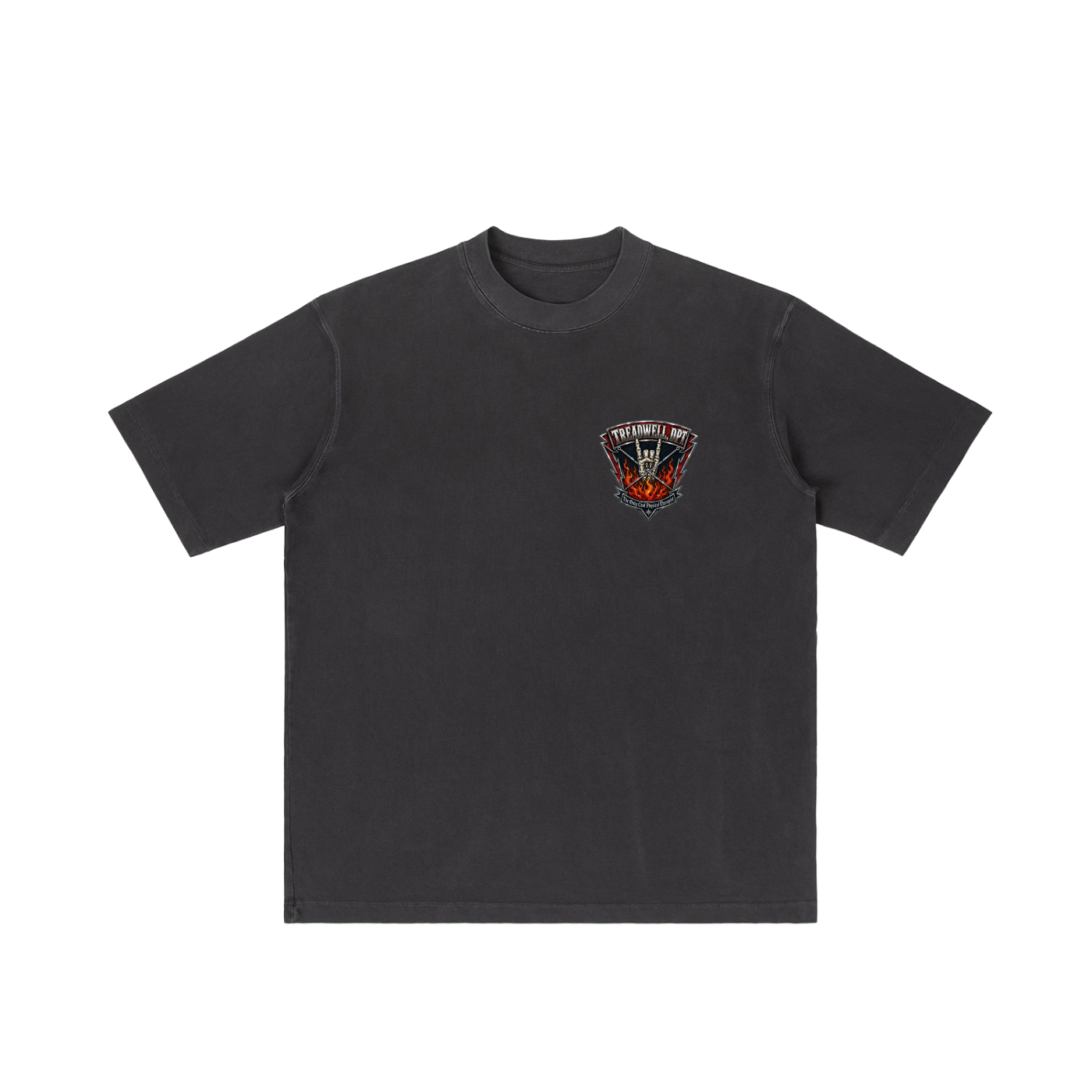
The I Survived Physical Therapy Tee is for anyone who’s been through the grind — the reps, the soreness, the “one more set,” and the moments where rehab felt like a full-contact sport. Built with a bold championship-style back graphic and a clean front badge, this shirt gives PT patients, rehab pros, and gym people a way to wear the comeback story.
Perfect for physical therapists, PT students, rehab clinics, post-op warriors, athletes, lifters, and anyone who earned the right to say they survived physical therapy.
Wear it after a hard session, gift it to a discharged patient, or rep it as a badge of honor for making it through the work.
Best for:
Physical therapy patients, PTs, PTAs, rehab pros, post-op recovery, athletes, gym lovers, and anyone who survived the treatment table.
NO REFUNDS/EXCHANGES
