
Video: https://youtu.be/NYmF16YnKBc
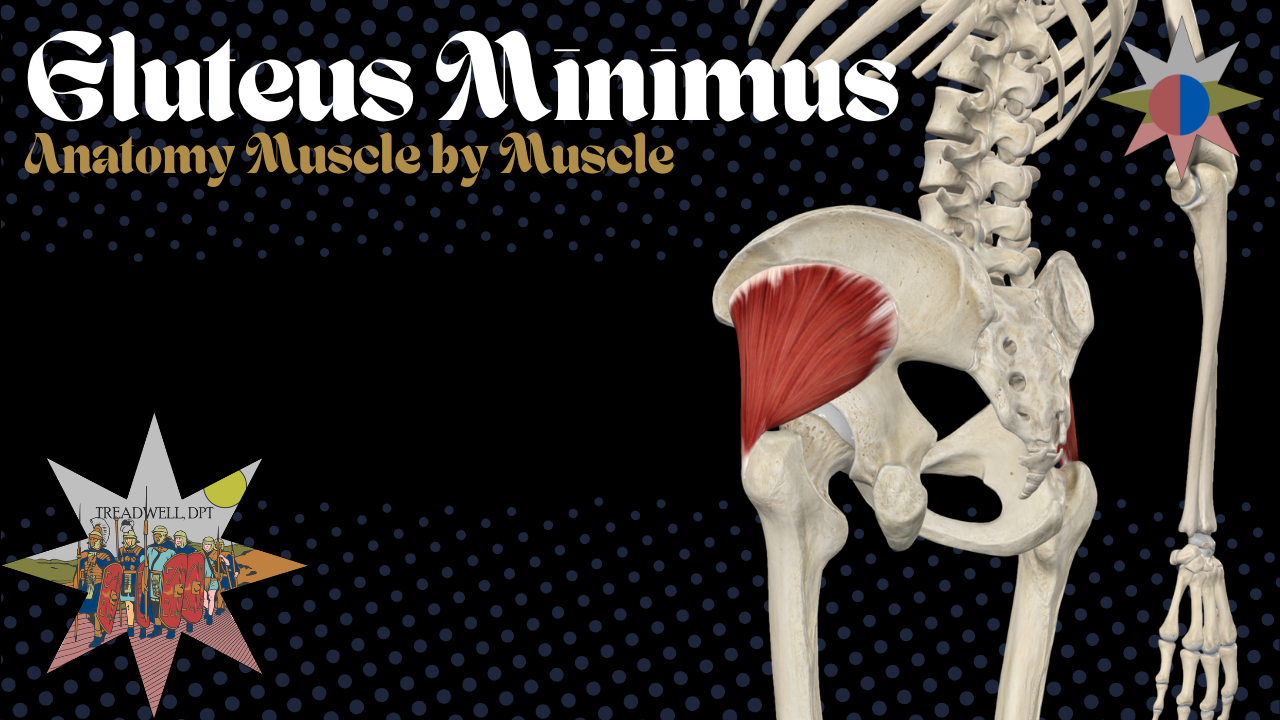
The gluteus minimus, commonly called the glute min, is the smallest and deepest of the three gluteal muscles. Despite its size, it plays an important role in hip abduction, femoral control, pelvic stability, walking mechanics, single-leg balance, and stabilization of the hip joint.
Located deep beneath the gluteus medius, the gluteus minimus helps control the relationship between the pelvis and femur. Its attachments to both the greater trochanter and hip joint capsule may also allow it to help center the femoral head within the hip socket.
In this Anatomy Breakdown, we cover the gluteus minimus muscle’s:
Origin and insertion
Innervation
Primary actions
Relationship with the gluteus medius
Role in pelvic and femoral control
Connection to the hip joint capsule
Importance during gait and single-leg activity
Potential relationship with aging, muscle degeneration, and fall risk
What Is the Gluteus Minimus?
The gluteus minimus is the smallest and deepest of the three gluteal muscles.
The three primary gluteal muscles are:
Gluteus maximus
Gluteus medius
Gluteus minimus
The gluteus maximus is the largest and most superficial. The gluteus medius sits along the upper and outer portion of the pelvis. The gluteus minimus lies underneath the gluteus medius, closely covering the external surface of the ilium.
Because of its deep location, the gluteus minimus is not typically visible from the surface. However, it remains active during many movements involving the hip, pelvis, and lower extremity.
Like the gluteus medius, the gluteus minimus has a broad, fan-shaped appearance. Its fibers spread across the lateral pelvis before converging toward the proximal femur.
Gluteus Minimus Origin
The gluteus minimus originates from the:
External surface of the ilium
Area between the anterior gluteal line
And the inferior gluteal line
This origin places the gluteus minimus slightly deeper and more inferiorly than the gluteus medius.
Its broad attachment across the lateral ilium creates multiple fiber directions, allowing different portions of the muscle to contribute to hip movement and stabilization.
Gluteus Minimus Insertion
The gluteus minimus inserts onto the:
Anterior surface of the greater trochanter of the femur
Some fibers of the gluteus minimus also blend with the capsule of the hip joint.
Its relatively anterior insertion helps explain why the muscle can contribute to hip abduction, internal rotation, and control of the femoral head.
The muscle therefore travels from the external ilium to the anterior portion of the greater trochanter, connecting the lateral pelvis directly to the proximal femur.
Gluteus Minimus Innervation
The gluteus minimus is innervated by the:
Superior gluteal nerve
The associated nerve roots are:
L4, L5, and S1
The superior gluteal nerve also supplies the:
Gluteus medius
Tensor fasciae latae
Together, these muscles form an important group of lateral hip stabilizers.
They share roles in:
Hip abduction
Pelvic control
Femoral stabilization
Single-leg balance
Walking and running mechanics
Gluteus Minimus Actions
The primary action of the gluteus minimus is:
Hip abduction
Hip abduction moves the femur away from the body’s midline.
The gluteus minimus also assists with:
Hip internal rotation
Hip flexion, depending on hip position and fiber recruitment
Its actions are similar to those of the anterior portion of the gluteus medius.
However, the gluteus minimus should not be viewed only as a muscle that moves the leg out to the side. Its deeper location and relationship with the hip capsule give it an important role in joint control and stabilization.
Gluteus Minimus and Hip Stability
The gluteus minimus helps stabilize the hip during closed-chain movement, when the foot is planted on the ground.
During weight-bearing activity, it can assist with:
Controlling the pelvis over the femur
Limiting excessive pelvic drop
Managing femoral motion
Maintaining hip joint alignment
Supporting single-leg stability
Controlling movement in the frontal and transverse planes
This makes the gluteus minimus important during activities such as:
Walking
Running
Stair climbing
Stepping
Single-leg balance
Squatting
Lunging
Landing
Cutting and changing direction
The gluteus minimus is therefore both a movement muscle and a control muscle.
Gluteus Minimus and Pelvic Control
When standing on one leg, the lateral hip muscles must generate enough force to prevent the opposite side of the pelvis from dropping.
The gluteus medius is typically recognized as the primary muscle responsible for this function, but the gluteus minimus also contributes to the hip abductor force needed for pelvic stability.
Reduced function within the lateral hip musculature may contribute to:
Contralateral pelvic drop
Trunk lean
Increased hip adduction
Excessive femoral internal rotation
Dynamic knee valgus
Reduced single-leg balance
Altered walking mechanics
The gluteus minimus works alongside the gluteus medius, tensor fasciae latae, gluteus maximus, deep hip rotators, and trunk musculature to keep the lower extremity controlled.
Gluteus Minimus and the Hip Joint Capsule
One of the most interesting features of the gluteus minimus is its relationship with the hip joint capsule.
The gluteus minimus does not attach only to the greater trochanter. Portions of the muscle also blend into the capsule surrounding the hip joint.
This connection may allow the gluteus minimus to:
Tension the hip joint capsule
Assist with joint stability
Help control capsular movement
Support positioning of the femoral head
Contribute to smooth hip motion
The hip joint is formed by the head of the femur sitting inside the acetabulum of the pelvis.
Because the gluteus minimus lies deep and close to the joint, it may help maintain the relationship between these two surfaces during movement.
Is the Gluteus Minimus Like a Rotator Cuff Muscle?
The gluteus minimus can be compared conceptually to the muscles of the shoulder’s rotator cuff.
The rotator cuff helps:
Center the humeral head within the shoulder socket
Control joint movement
Provide dynamic stability
Guide movement while larger muscles produce force
Similarly, the gluteus minimus may help stabilize and control the femoral head within the acetabulum while larger hip muscles produce movement.
The hip and shoulder are structurally different joints, so the comparison is not exact. However, it can be a useful way to understand the gluteus minimus as more than a simple hip abductor.
It is a deep muscle that may contribute to both movement and joint-centered stabilization.
Gluteus Minimus Fiber Function
The function of the gluteus minimus may change depending on:
Hip position
Which portion of the muscle is active
Whether the leg is weight-bearing
Movement direction
Joint angle
External resistance
Depending on these factors, the gluteus minimus may contribute to:
Hip abduction
Hip internal rotation
Hip external rotation
Hip flexion
Femoral head stabilization
Hip capsule tensioning
This helps explain why defining the muscle only as an internal rotator or abductor may be overly simplistic.
Its role changes according to the mechanical demands placed on the hip.
Gluteus Minimus and Walking
During walking, the gluteus minimus helps control the pelvis and femur as body weight passes over the stance leg.
It works with the gluteus medius and other hip muscles to:
Keep the pelvis relatively level
Control hip adduction
Manage femoral rotation
Stabilize the hip joint
Support efficient weight transfer
Prepare the lower extremity for the next step
Reduced lateral hip function may lead to compensations such as:
Pelvic drop
Trunk lean toward the stance leg
Shortened step length
Reduced single-leg support time
Increased reliance on assistive devices
Less efficient gait mechanics
These findings are not specific to the gluteus minimus alone, but the muscle contributes to the larger lateral hip stabilization system responsible for controlled walking.
Gluteus Minimus and Lateral Hip Pain
The gluteus minimus tendon may be involved in pain around the outer portion of the hip.
Possible symptoms associated with gluteal tendon irritation include:
Pain over the lateral hip
Pain near the greater trochanter
Pain while lying on the involved side
Pain during prolonged standing
Pain while walking
Pain during stair climbing
Pain with single-leg stance
Tenderness along the lateral hip
Gluteus minimus and gluteus medius tendon disorders are commonly discussed as part of greater trochanteric pain syndrome.
Lateral hip pain should not automatically be attributed to a weak gluteus minimus. Other possible contributors include:
Gluteus medius tendon irritation
Greater trochanteric bursa irritation
Hip osteoarthritis
Lumbar spine referral
Nerve-related pain
Hip joint pathology
Training-load changes
Reduced tolerance to compression or loading
A complete clinical evaluation is needed to determine the most likely source of symptoms.
Gluteus Minimus and Fall Risk
The gluteus minimus may also be clinically important when evaluating older adults with reduced balance or increased fall risk.
Age-related changes in muscle quality may include:
Reduced muscle size
Reduced strength
Fatty infiltration
Reduced neuromuscular control
Lower power production
Reduced capacity during single-leg tasks
Because the gluteus minimus contributes to deep hip stability, pelvic control, and gait mechanics, degeneration within this muscle may affect balance and lower-extremity control.
Research examining older adults has suggested that fatty changes within the gluteus minimus may appear early and could potentially provide information about declining hip function or fall risk.
These findings do not mean that gluteus minimus degeneration alone predicts whether someone will fall. Fall risk is complex and may also be influenced by:
Vision
Vestibular function
Medication use
Neurological conditions
Lower-extremity strength
Walking speed
Home environment
Reaction time
Fear of falling
Previous fall history
However, the gluteus minimus may be one meaningful component of the larger clinical picture.
Gluteus Minimus Strengthening
The gluteus minimus works closely with the gluteus medius, making it difficult to completely isolate during exercise.
Common exercises used to strengthen the lateral hip include:
Side-lying hip abduction
Standing hip abduction
Lateral band walks
Monster walks
Hip hikes
Step-ups
Lateral step-downs
Single-leg balance
Split squats
Single-leg Romanian deadlifts
Controlled single-leg squats
Walking and running drills
Multidirectional stepping
Exercise selection should depend on:
Current strength
Pain levels
Balance ability
Movement control
Training experience
Functional goals
Ability to tolerate weight-bearing
Early rehabilitation may begin with controlled hip abduction exercises. Later stages should include standing and single-leg activities that challenge the gluteus minimus in its functional role as a stabilizer.
Can You Isolate the Gluteus Minimus?
It is difficult to completely isolate the gluteus minimus because it shares actions and nerve supply with the gluteus medius and tensor fasciae latae.
Exercises involving hip abduction and pelvic control will typically recruit several muscles at the same time.
Rather than attempting to activate only the gluteus minimus, training should generally focus on improving the function of the entire hip stabilization system.
This may include:
Improving lateral hip strength
Improving single-leg balance
Building posterior-chain strength
Controlling femoral rotation
Developing pelvic stability
Progressing walking and stair tolerance
Improving coordination during multidirectional movement
The goal is effective movement and load sharing, not perfect isolation of one muscle.
Clinical Takeaway
The gluteus minimus may be the smallest and deepest gluteal muscle, but it remains an important part of the hip stabilization system.
It contributes to:
Hip abduction
Hip internal rotation
Hip flexion
Pelvic control
Femoral control
Single-leg stability
Walking and running mechanics
Hip capsule tensioning
Femoral head stabilization
Lateral hip strength
Its connection with the hip joint capsule makes it especially interesting from a clinical and anatomical perspective.
The gluteus minimus should not be viewed only as a smaller version of the gluteus medius. It is a deep joint-control muscle that helps organize the relationship between the pelvis, femur, and hip socket.
Frequently Asked Questions
What does the gluteus minimus do?
The gluteus minimus assists with hip abduction, internal rotation, and sometimes hip flexion. It also contributes to pelvic stability, femoral control, and stabilization of the hip joint during weight-bearing movement.
Where is the gluteus minimus located?
The gluteus minimus is located on the lateral surface of the pelvis, deep beneath the gluteus medius. It is the smallest and deepest of the three gluteal muscles.
What is the origin of the gluteus minimus?
The gluteus minimus originates from the external surface of the ilium between the anterior and inferior gluteal lines.
Where does the gluteus minimus insert?
The gluteus minimus inserts onto the anterior surface of the greater trochanter of the femur. Some fibers also blend with the hip joint capsule.
What nerve innervates the gluteus minimus?
The gluteus minimus is innervated by the superior gluteal nerve, with contributions from the L4, L5, and S1 nerve roots.
Is the gluteus minimus a hip abductor?
Yes. Hip abduction is one of the primary actions of the gluteus minimus.
Does the gluteus minimus internally rotate the hip?
The gluteus minimus commonly assists with hip internal rotation because of its relatively anterior position and insertion. Its rotational contribution may change depending on hip position and which fibers are active.
What is the difference between gluteus medius and gluteus minimus?
The gluteus medius is larger and more superficial. The gluteus minimus is smaller, deeper, and located underneath the gluteus medius. Both contribute to hip abduction and pelvic stability, but the gluteus minimus has a particularly close relationship with the hip joint capsule.
Can the gluteus minimus cause lateral hip pain?
The gluteus minimus tendon may contribute to lateral hip pain, particularly as part of greater trochanteric pain syndrome. Other hip, tendon, bursal, spinal, and nerve-related conditions can produce similar symptoms.
What are the best gluteus minimus exercises?
Useful exercises may include side-lying hip abduction, standing hip abduction, lateral band walks, step-downs, hip hikes, single-leg balance, split squats, and single-leg Romanian deadlifts. The most appropriate exercise depends on the person’s symptoms, strength, balance, and goals.
Can you isolate the gluteus minimus?
Complete isolation is difficult because the gluteus minimus works closely with the gluteus medius and tensor fasciae latae. Most lateral hip exercises recruit several stabilizing muscles together.
Does the gluteus minimus help stabilize the hip joint?
Yes. Its deep location and attachment to the hip capsule suggest that it can assist with capsular tension and stabilization of the femoral head within the acetabulum.
Continue Learning Anatomy
Explore more episodes of Anatomy Breakdown – Muscle by Muscle to learn the origins, insertions, innervation, actions, and clinical relevance of muscles throughout the human body.
Watch the Gluteus Medius Anatomy Breakdown:
https://youtu.be/usk3ZsLK8YM
Subscribe on YouTube:
https://www.youtube.com/@TreadwellDPT
Explore more physical therapy, anatomy, rehabilitation, and movement content:
https://TreadwellDPT.com
Fabric:100% cotton
Fabric Weight: 10.3 oz/yd² (350 g/m²)
Fabric Thickness: Thick
Physical therapy isn’t for the weak.
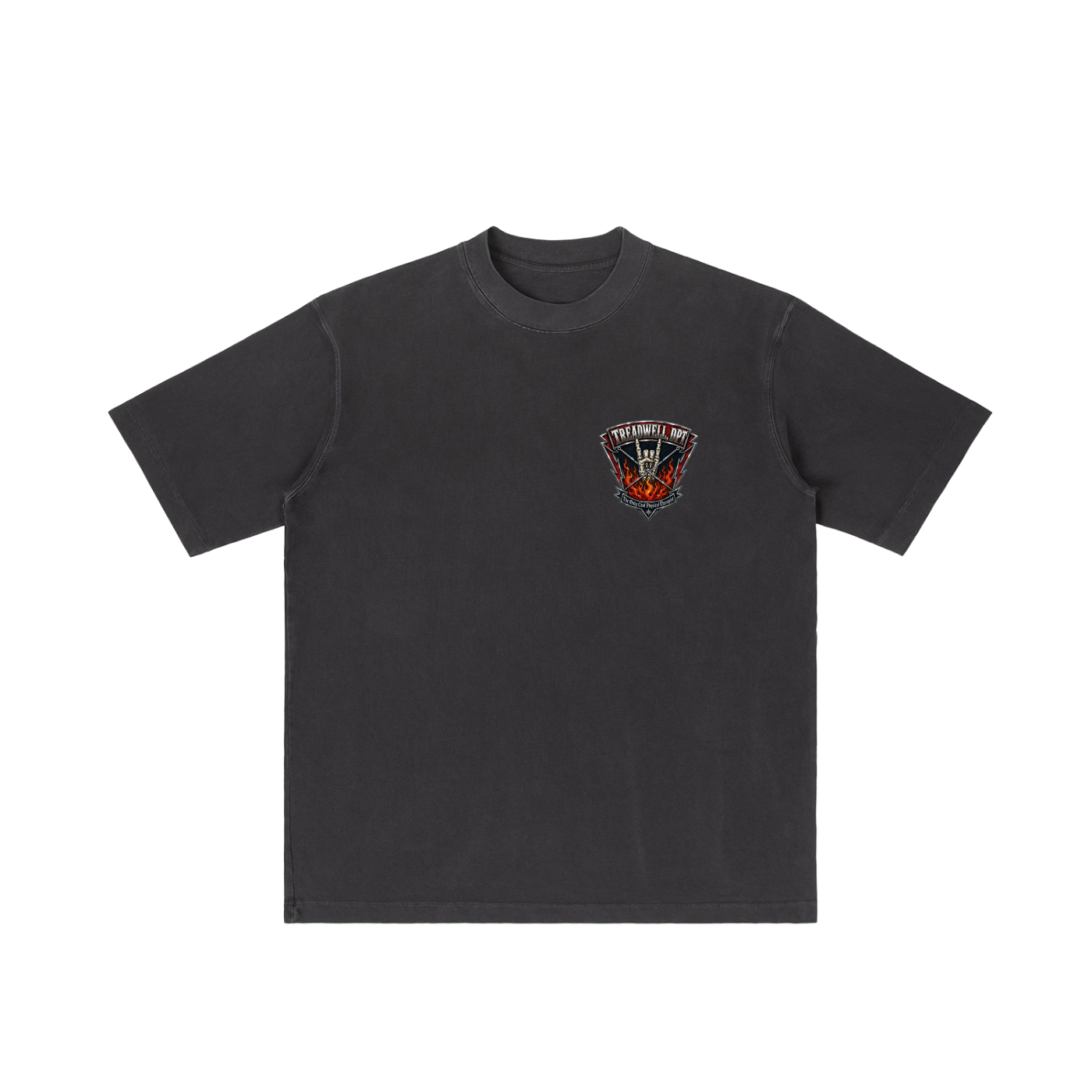
The I Survived Physical Therapy Tee is for anyone who’s been through the grind — the reps, the soreness, the “one more set,” and the moments where rehab felt like a full-contact sport. Built with a bold championship-style back graphic and a clean front badge, this shirt gives PT patients, rehab pros, and gym people a way to wear the comeback story.
Perfect for physical therapists, PT students, rehab clinics, post-op warriors, athletes, lifters, and anyone who earned the right to say they survived physical therapy.
Wear it after a hard session, gift it to a discharged patient, or rep it as a badge of honor for making it through the work.
Best for:
Physical therapy patients, PTs, PTAs, rehab pros, post-op recovery, athletes, gym lovers, and anyone who survived the treatment table.
NO REFUNDS/EXCHANGES
