
Video: https://youtu.be/dh8hyU-AWv8
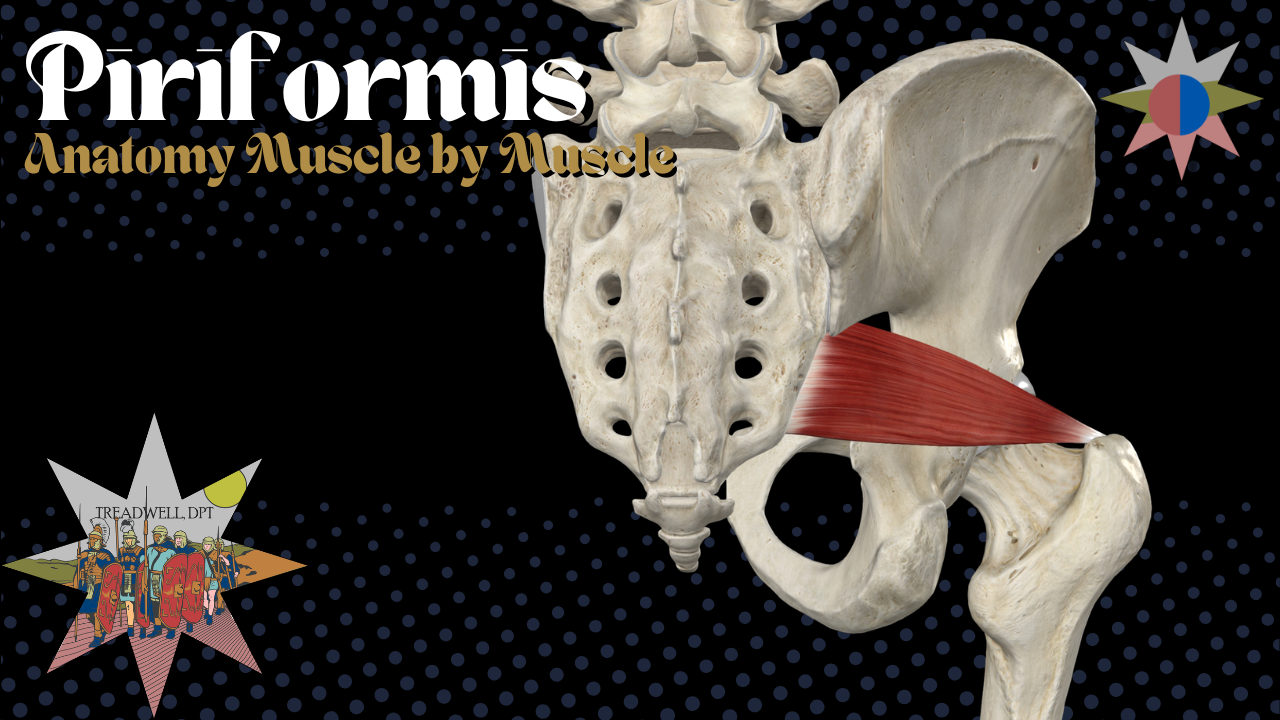
The piriformis is a small, pear-shaped muscle located deep within the posterior hip. It is best known as a hip external rotator, but it also contributes to hip abduction, rotational control, joint stability, and movement of the femur relative to the pelvis.
The piriformis receives significant clinical attention because of its close relationship with the sciatic nerve. Although the sciatic nerve usually passes beneath the muscle, anatomical variations can cause portions of the nerve to travel through or around the piriformis.
This relationship may be relevant in some cases of deep buttock pain, sitting intolerance, and sciatica-like symptoms. However, not every pain in the buttock or back of the leg is caused by the piriformis.
In this Anatomy Breakdown, we cover the piriformis muscle’s:
Origin and insertion
Innervation
Primary actions
Changing function based on hip position
Role in deep hip stability
Relationship with the sciatic nerve
Anatomical sciatic nerve variations
Clinical presentation of piriformis syndrome
FAIR test
Differential diagnosis of deep gluteal pain
What Is the Piriformis?
The piriformis is a small, flat muscle located deep within the posterior hip and gluteal region.
Its name comes from its approximately pear-shaped appearance.
The piriformis sits beneath the gluteus maximus and travels from the anterior surface of the sacrum toward the upper portion of the femur.
It is part of the deep external rotator group of the hip, which also includes the:
Superior gemellus
Obturator internus
Inferior gemellus
Obturator externus
Quadratus femoris
These smaller muscles help control rotation of the femur and provide deep stabilization around the hip joint.
The piriformis is especially important anatomically because it passes through the greater sciatic foramen, an opening that allows several nerves and blood vessels to travel between the pelvis and gluteal region.
Piriformis Origin
The piriformis originates primarily from the:
Anterior surface of the sacrum
This means the muscle begins on the front side of the sacrum, within the pelvis.
Attachments are generally described around the middle sacral segments, with the muscle fibers positioned near the anterior sacral foramina.
Additional attachments may also be described to surrounding connective tissues near the pelvis and sacrum.
From its origin, the piriformis travels laterally toward the femur.
Piriformis Insertion
The piriformis inserts onto the:
Superior border of the greater trochanter of the femur
The greater trochanter is the prominent bony region located near the upper portion of the femur.
The piriformis therefore travels from the anterior sacrum to the superior greater trochanter.
In simple terms:
Anterior sacrum to greater trochanter
This orientation allows the piriformis to influence hip rotation, abduction, and deep joint control.
Piriformis and the Greater Sciatic Foramen
After originating from the anterior sacrum, the piriformis exits the pelvis through the:
Greater sciatic foramen
This is one of the most important anatomical features of the muscle.
The piriformis passes through this opening superior to the sacrospinous and sacrotuberous ligaments.
Its position divides the greater sciatic foramen into two spaces:
Suprapiriform foramen
Infrapiriform foramen
Important nerves and blood vessels pass either above or below the piriformis.
Because of this relationship, the piriformis acts as a major anatomical landmark within the deep gluteal region.
Piriformis Innervation
The piriformis is innervated by the:
Nerve to piriformis
The primary nerve roots are:
S1 and S2
Some anatomical sources also describe a possible contribution from L5.
For most anatomy and clinical applications, the key relationship to remember is:
Piriformis — nerve to piriformis — S1 and S2
Piriformis Actions
The piriformis is commonly described as a:
Hip external rotator
When the hip is relatively extended, the piriformis helps rotate the femur outward.
However, the function of the piriformis changes according to hip position.
Piriformis With the Hip Extended
When the hip is extended or near neutral, the piriformis primarily assists with:
Hip external rotation
Deep hip stabilization
Control of femoral rotation
Piriformis With the Hip Flexed
As the hip moves into flexion, the piriformis may contribute more to:
Hip abduction
Femoral head control
Deep hip stabilization
At greater degrees of hip flexion, its line of pull changes enough that it may contribute to internal rotation rather than external rotation.
This is why defining the piriformis only as an external rotator is incomplete.
Its action depends on:
Hip position
Pelvic position
Weight-bearing status
Direction of movement
External resistance
Which fibers are producing tension
Piriformis and Hip Stability
The piriformis is not a large power-producing muscle like the gluteus maximus.
Instead, it functions more as a deep control muscle.
It may contribute to:
Femoral head stabilization
Control of hip rotation
Pelvic and femoral coordination
Hip joint compression
Movement precision
Posterior hip stability
The piriformis works alongside the other deep hip rotators to help maintain control of the femoral head within the acetabulum.
This role becomes especially relevant during dynamic activities such as:
Walking
Running
Cutting
Changing direction
Single-leg balance
Stair climbing
Squatting
Rotational sports movements
These muscles may not generate the largest forces, but they help fine-tune the relationship between the pelvis and femur.
Piriformis and the Sciatic Nerve
The piriformis receives substantial clinical attention because of its close relationship with the:
Sciatic nerve
The sciatic nerve is the largest nerve in the human body.
It begins from nerve roots in the lumbosacral region, travels through the pelvis and deep gluteal region, and continues down the posterior thigh before dividing into its major branches.
In most people, the sciatic nerve exits the pelvis:
Beneath the piriformis
As one large nerve trunk
Because the nerve and muscle are close neighbors, irritation or compression within this region may produce symptoms involving the buttock or posterior leg.
Possible symptoms may include:
Deep buttock pain
Pain aggravated by sitting
Posterior thigh discomfort
Tingling
Burning
Numbness
Sciatica-like pain
Symptoms aggravated by specific hip positions
However, the close relationship between the structures does not mean the piriformis is automatically responsible for every case of sciatica.
Sciatic Nerve Anatomical Variations
Not every sciatic nerve follows the same path around the piriformis.
Anatomical variations may include:
The entire sciatic nerve passing beneath the piriformis
One division passing through the piriformis
One division passing above the piriformis
One division passing beneath the muscle while another passes through it
Early division of the sciatic nerve into tibial and common fibular components
These variations may influence:
Symptom presentation
Susceptibility to local irritation
Injection planning
Surgical approaches
Nerve blocks
Interpretation of deep gluteal pain
Response to certain hip positions
An anatomical variation does not automatically cause pain. Many people have nerve variations without experiencing symptoms.
However, these variations help explain why the relationship between the piriformis and sciatic nerve may differ between individuals.
What Is Piriformis Syndrome?
Piriformis syndrome is a clinical condition in which the piriformis region is believed to contribute to irritation of the sciatic nerve or nearby tissues.
It may produce symptoms such as:
Deep buttock pain
Pain aggravated by prolonged sitting
Tenderness near the greater sciatic notch
Posterior thigh symptoms
Sciatica-like pain
Symptoms reproduced by loading or lengthening the piriformis
Piriformis syndrome remains a diagnosis that requires careful clinical reasoning.
There is no single symptom or test that proves the piriformis is the source of pain.
The clinical picture should be interpreted alongside findings involving the:
Lumbar spine
Sacroiliac region
Hip joint
Proximal hamstring
Sciatic nerve
Gluteal tendons
Deep hip rotators
Other structures within the deep gluteal space
Piriformis Syndrome Symptoms
Commonly discussed features of piriformis-related pain include:
Buttock pain
Symptoms aggravated by sitting
Tenderness around the greater sciatic notch
Pain during positions that load or stretch the piriformis
Reproduction of familiar symptoms during specific clinical tests
Possible pain or neurological symptoms traveling down the posterior leg
A person does not necessarily have piriformis syndrome simply because they experience:
General hip tightness
Low back pain
Hamstring discomfort
Buttock soreness after exercise
Sciatica
Pain with sitting
The entire symptom pattern matters.
Piriformis Syndrome vs. Sciatica
Sciatica is a general term describing symptoms associated with irritation of the sciatic nerve or the nerve roots that contribute to it.
Sciatica-like symptoms may arise from several locations.
Possible causes include:
Lumbar disc pathology
Lumbar spinal stenosis
Nerve-root irritation
Deep gluteal syndrome
Piriformis-related irritation
Proximal hamstring pathology
Pelvic masses or other less common conditions
Peripheral nerve entrapment
Piriformis syndrome is only one possible explanation.
Lumbar spine involvement is considerably more common and should be assessed when a person reports pain, numbness, tingling, or weakness traveling down the leg.
Deep Gluteal Syndrome
The term deep gluteal syndrome may be used to describe non-disc-related sciatic nerve entrapment or irritation within the deep gluteal space.
The piriformis can be involved, but it is not the only possible source.
Other possible contributors include:
Fibrous bands
Obturator internus
Gemelli muscles
Quadratus femoris
Proximal hamstring structures
Ischiofemoral impingement
Vascular structures
Scar tissue
Anatomical nerve variations
This broader framework can be more useful than assuming all deep buttock pain is caused by piriformis syndrome.
What Is the FAIR Test?
The FAIR test is commonly discussed during the assessment of suspected piriformis-related symptoms.
FAIR stands for:
Flexion
Adduction
Internal rotation
During the test, the hip is placed into a position that may increase tension or compression around the piriformis and deep gluteal region.
A positive test occurs when the position reproduces the person’s familiar symptoms.
The FAIR test may be more clinically meaningful when it reproduces:
Familiar deep buttock pain
Sitting-related symptoms
Posterior thigh pain
Sciatic-type symptoms
Symptoms consistent with the rest of the examination
The FAIR test should not be interpreted in isolation.
A painful hip position can occur for many reasons, including joint pathology, muscle sensitivity, neural tension, and other sources of deep gluteal pain.
Other Piriformis Clinical Tests
Additional clinical maneuvers may be used when assessing the piriformis or deep gluteal region.
These may include:
Active piriformis test
Seated piriformis stretch test
Freiberg maneuver
Pace sign
Beatty maneuver
Palpation near the greater sciatic notch
Resisted hip abduction or external rotation testing
No single test should be used as definitive proof of piriformis syndrome.
Findings become more useful when several pieces of the clinical picture agree.
Can Sitting Irritate the Piriformis?
Prolonged sitting may aggravate symptoms involving the piriformis or deep gluteal region.
Sitting places the hip into flexion and may create sustained pressure through the buttock.
Depending on the individual, this may increase:
Compression of sensitive tissues
Tension around the sciatic nerve
Deep gluteal discomfort
Hip stiffness
Neural irritability
However, sitting-related buttock pain can also be associated with:
Lumbar spine conditions
Proximal hamstring tendinopathy
Ischial bursitis
Sacroiliac pain
Hip joint pathology
Pelvic floor dysfunction
Other deep gluteal structures
The presence of sitting pain alone does not confirm piriformis syndrome.
Should You Stretch the Piriformis?
Piriformis stretching may provide relief for some people, particularly when symptoms are associated with muscle tension or a temporary loss of comfortable hip mobility.
However, stretching is not appropriate for every presentation.
Aggressive stretching may worsen symptoms when the area is already:
Highly irritable
Compressed
Neurologically sensitive
Painful with hip flexion
Sensitive to adduction and internal rotation
Stretching should not automatically be prescribed simply because someone has buttock pain or sciatica-like symptoms.
The response to the stretch matters more than the name of the exercise.
A useful stretch should generally produce a tolerable pulling sensation without causing:
Sharp pain
Burning
Tingling
Numbness
Increasing leg symptoms
Symptoms that remain worse afterward
Piriformis Treatment and Rehabilitation
Treatment should be based on the individual’s clinical presentation rather than a generic piriformis protocol.
Possible components may include:
Activity modification
Sitting-position changes
Gradual exposure to aggravating positions
Hip mobility work
Hip strengthening
Gluteal strengthening
Trunk strengthening
Deep hip rotator control
Neural mobility exercises when appropriate
Manual therapy
Load management
Walking or gait training
Education regarding symptom triggers
Some cases may also involve medical interventions such as:
Diagnostic injections
Corticosteroid injections
Botulinum toxin injections
Image-guided procedures
Surgical decompression in uncommon, persistent cases
The best plan depends on the suspected pain mechanism, neurological findings, functional limitations, and response to treatment.
Can Piriformis Syndrome Be Diagnosed at Home?
Piriformis syndrome cannot be diagnosed reliably through one stretch, one tender spot, or one online test.
Several conditions can produce similar symptoms.
A thorough assessment may include evaluation of:
Lumbar movement
Neurological function
Reflexes
Strength
Sensation
Neural tension
Hip mobility
Hip strength
Sitting tolerance
Gait
Palpation
Symptom reproduction during specific positions
Seek medical evaluation when symptoms involve:
Progressive weakness
Significant numbness
Changes in bowel or bladder function
Saddle-region numbness
Severe or worsening pain
Recent major trauma
Fever or unexplained illness
Inability to bear weight
Clinical Takeaway
The piriformis is a small but clinically important muscle.
It contributes to:
Hip external rotation
Hip abduction in flexion
Rotational control
Femoral head stabilization
Deep hip stability
Coordination between the sacrum, pelvis, and femur
Its relationship with the sciatic nerve makes it highly relevant when assessing deep buttock pain and sciatica-like symptoms.
However, piriformis syndrome should not become a default diagnosis for every person with pain in the gluteal region.
A more complete clinical approach should:
Assess the symptom pattern
Consider sitting tolerance
Examine the lumbar spine
Examine the hip joint
Assess the sciatic nerve
Consider hamstring and sacroiliac involvement
Reproduce symptoms carefully
Rule out more likely or serious causes
Treat the person rather than the muscle label
The piriformis deserves attention, but it also deserves nuance.
It may be involved in a person’s symptoms without necessarily being the sole cause.
Frequently Asked Questions
What does the piriformis do?
The piriformis externally rotates the hip when the hip is extended. As the hip moves into flexion, it contributes more to hip abduction and may assist with internal rotation. It also functions as a deep hip stabilizer.
Where is the piriformis located?
The piriformis is located deep within the posterior hip and gluteal region. It runs from the anterior surface of the sacrum to the greater trochanter of the femur.
What is the origin of the piriformis?
The piriformis originates primarily from the anterior surface of the sacrum.
Where does the piriformis insert?
The piriformis inserts onto the superior border of the greater trochanter of the femur.
What nerve innervates the piriformis?
The piriformis is innervated by the nerve to piriformis, primarily from the S1 and S2 nerve roots.
Does the sciatic nerve pass through the piriformis?
In most people, the sciatic nerve passes beneath the piriformis. In some anatomical variations, one portion of the nerve may pass through or above the muscle.
What is piriformis syndrome?
Piriformis syndrome is a clinical condition in which the piriformis region is believed to irritate or compress the sciatic nerve. Symptoms may include deep buttock pain, sitting intolerance, and sciatica-like pain.
What does piriformis syndrome feel like?
Possible symptoms include deep buttock pain, tenderness near the greater sciatic notch, pain aggravated by sitting, and symptoms traveling down the back of the leg.
Is piriformis syndrome the same as sciatica?
No. Sciatica describes symptoms involving the sciatic nerve or contributing nerve roots. Piriformis syndrome is one possible cause of sciatica-like symptoms, but lumbar spine conditions and other sources are more common.
What is the FAIR test?
The FAIR test places the hip into flexion, adduction, and internal rotation. Reproduction of familiar symptoms may support suspicion of piriformis or deep gluteal involvement, but the test should not be used alone.
Can a tight piriformis cause sciatica?
The piriformis may contribute to sciatic nerve irritation in some individuals. However, describing the muscle as simply “tight” does not explain the cause of symptoms or confirm a diagnosis.
Should you stretch the piriformis for sciatica?
Stretching may help some people but worsen symptoms in others. It should not be used automatically for all sciatica or buttock pain, especially when it increases tingling, numbness, burning, or leg pain.
Can piriformis syndrome cause numbness or tingling?
It may produce numbness, tingling, burning, or pain along the sciatic nerve distribution. These symptoms can also arise from the lumbar spine and should be evaluated appropriately.
How is piriformis syndrome treated?
Treatment may include activity modification, education, hip and trunk strengthening, mobility work, manual therapy, neural mobility, load management, and gradual return to activity. More persistent cases may require medical evaluation or image-guided intervention.
Continue Learning Anatomy
Explore more episodes of Anatomy Breakdown – Muscle by Muscle to learn the origins, insertions, innervation, actions, and clinical relevance of muscles throughout the human body.
Watch the Gluteus Minimus Anatomy Breakdown:
https://youtu.be/NYmF16YnKBc
Watch the Gluteus Medius Anatomy Breakdown:
https://youtu.be/usk3ZsLK8YM
Subscribe on YouTube:
https://www.youtube.com/@TreadwellDPT
Explore more physical therapy, anatomy, rehabilitation, and movement content:
https://TreadwellDPT.com
Real progress isn’t rushed.
Whether you’re in rehab or under the bar, control is what drives adaptation.
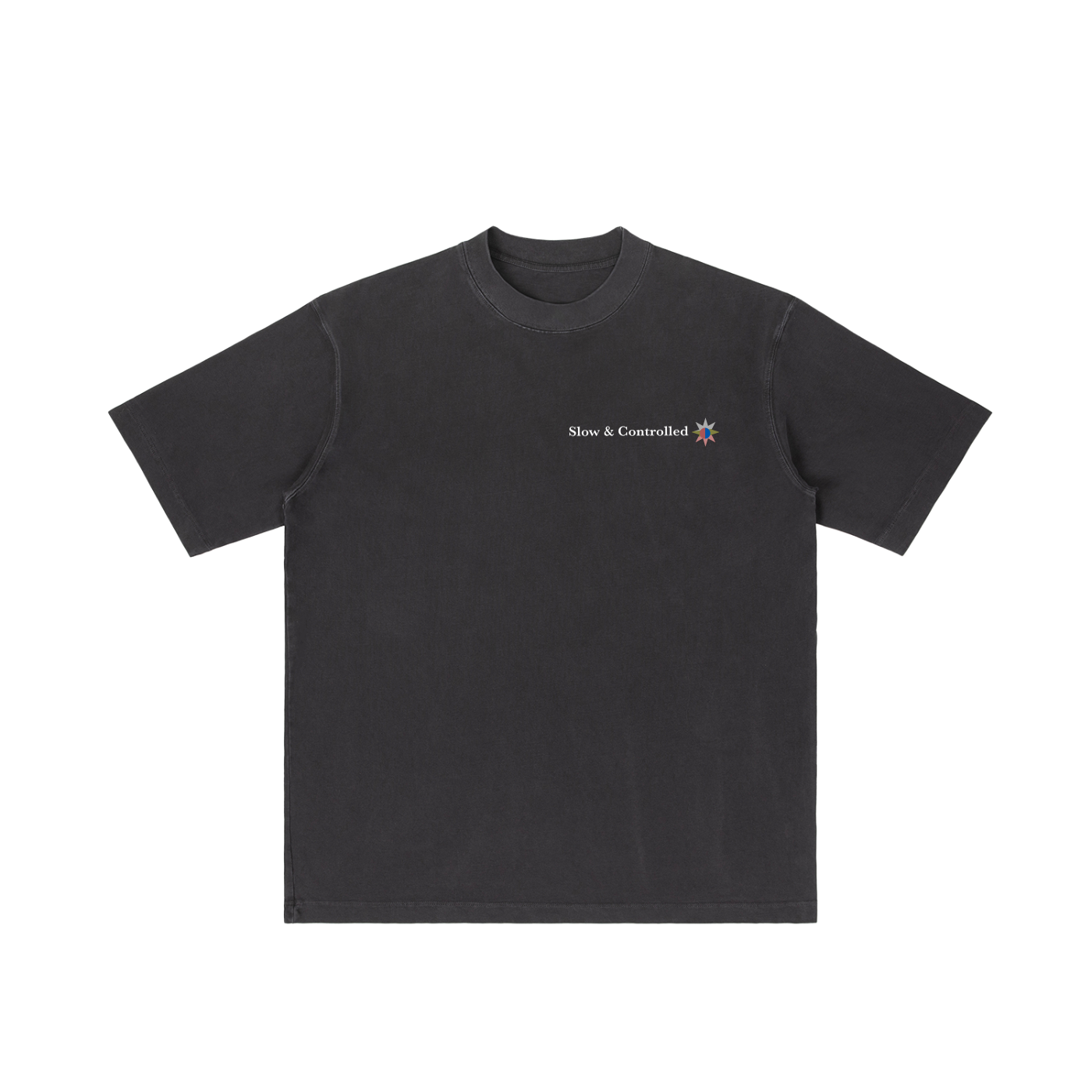
This physical therapy shirt is built around the principle of slow, controlled movement—essential for both rehabilitation and strength training.
The “Slow & Controlled” tee represents proper loading, movement control, and long-term adaptation for lifters, clinicians, and athletes.
Fabric:100% cotton
Fabric Weight:10.3 oz/yd² (350 g/m²)
Fabric Thickness:Thick
Care Instructions:Machine wash at 30°C (gentle cycle); Do not bleach; Tumble dry low; Iron at low temperature, avoid ironing on print; Do not dry clean
Notes:Minor batch differences can occur during blank garment production due to variations in fabric, dye and processing. This is common in apparel manufacturing, and we work hard to keep every item consistent.
NO REFUNDS/EXCHANGES
